How to Protect Yourself from Snakes?
911
Hainan is home to around 74 species of snakes, 27 of which are venomous. They are rarely found in resort areas, as the territory is monitored, but exceptions do occur—sometimes with tragic consequences.
So, how can you protect yourself, and where should you go in case of a snakebite in Sanya?
First and foremost, it’s important to understand that most snakes are not aggressive unless provoked. Not all snakes pose a venomous threat—many are completely harmless.
How to Stay Safe?
1) Stick to open areas – Snakes are secretive and avoid open spaces. Choose well-cleared spots with short grass where they can’t hide easily.
2) Be cautious at night – Move in well-lit areas to avoid accidentally stepping on a snake. During the heat of the day, snakes usually rest and become more active in cooler hours.
3) Protect your legs – Ankles and calves are the most vulnerable. Wearing jeans or sturdy high-top shoes reduces the risk of venom entering your bloodstream—or prevents a bite altogether. While not the most comfortable in tropical climates, it’s worth it if you’re heading into rural areas.
4) Make noise – Most snakes will sense your vibrations and retreat. When hiking on less-traveled paths, talk loudly, laugh, or stomp to announce your presence.
5) Check before stepping – Snakes don’t attack unprovoked and are often more afraid of you. Before stepping over logs or rocks, inspect them for resting snakes.
What If You Encounter a Snake?
1) Move slowly – Freeze and assess its behavior. If it’s slithering away, let it leave without provoking it. Sudden movements may trigger a defensive strike. Back away cautiously, giving it space to escape.
2) If cornered, retreat carefully – Note its size and keep a safe distance—a snake can strike up to half its body length. Respect this range to stay safe.
3) Do not provoke it – Poking it with a stick or kicking it will only trigger a lightning-fast attack. Some snakes even play dead when threatened.
4) Make noise (from a distance) – Stomping or talking loudly can scare it off—but only if the snake is far enough. Stay vocal to give it a chance to flee first.
5) Treat every snake as dangerous – Even dead snakes can deliver venom through their fangs, and baby snakes are just as hazardous. Never try to kill one—it’s more likely to provoke an attack.
6) Learn their body language – Hissing, coiling, or a raised head signal aggression. Recognizing these signs means it’s time to back away slowly.
7) Watch its movements – If it’s gliding along the ground, it’s likely retreating. A bent neck means it’s preparing to strike. Only pythons and some large constrictors move in a straight line; most snakes use sidewinding motions.
What If You’re Bitten?
1) Get to a hospital immediately – The faster the victim receives antivenom, the less damage the venom can do (see list below).
2) Keep the victim still – Minimize movement to slow blood circulation. Keep the bite area below heart level to reduce venom spread. Stay calm to prevent shock.
3) Remove tight clothing/jewelry – Swelling is common, so loosen anything constricting near the bite.
4) Apply a loose bandage – Wrap it snugly but not tight—you should be able to slip a finger underneath. Excessive pressure can cut off blood flow and increase tissue damage.
What NOT to Do After a Bite:
1) Do not suck out venom – It’s ineffective and risks further contamination.
2) Avoid tourniquets – Restricting blood flow can cause severe limb damage.
3) Don’t clean the wound – Residual venom helps doctors identify the snake.
4) Never cut the bite area – This doesn’t help and can worsen injury.
5) No ice, heat, or chemicals – Only antivenom can neutralize the poison.
6) Avoid alcohol/caffeine – They speed up venom absorption.
An unexpected snake encounter doesn’t have to be a stressful ordeal. By understanding snake behavior, recognizing warning signs, and staying calm, you can navigate these situations safely.
Save the list of Sanya hospitals and antivenom types—and may you never need it!
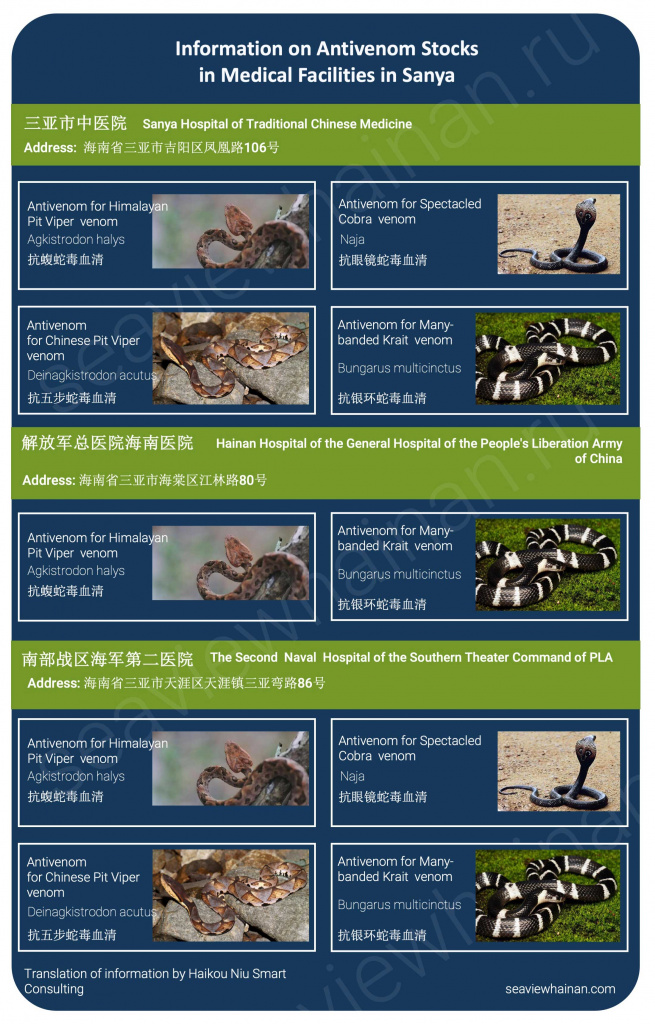
Translation of information by Haikou Niu Smart Consulting
0 Comments