Binglanggu — a whole day in a cultural treasure trove: tattoos, dances, and legends!
803
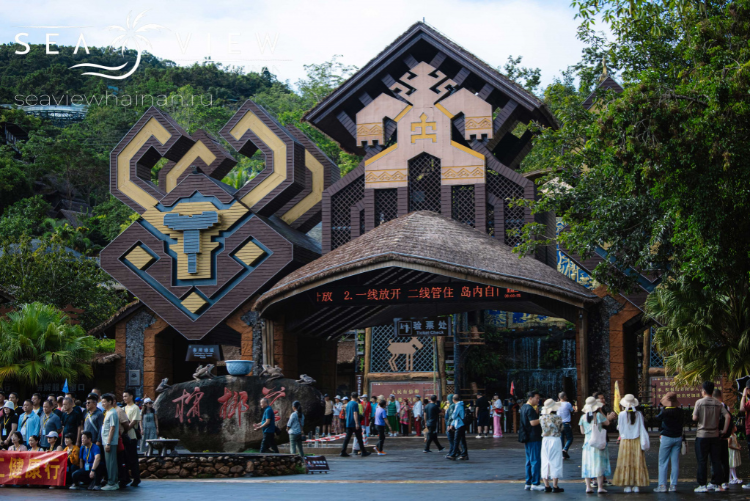
We invite you to spend an unforgettable day at the Binglanggu Ethnographic Park!
This place is definitely worth staying at from morning until evening. You certainly won’t have a moment to get bored: a vibrant program full of impressions awaits you. Immerse yourself in the unique culture and traditions of Hainan’s indigenous peoples, experience the thrill of active entertainment, choose unique local souvenirs, enjoy colorful shows, savor an authentic lunch and dinner, and end this eventful day to the rhythms of lively bonfire dances. Sounds like a dream day, doesn’t it?
Now, let’s go through everything step by step!
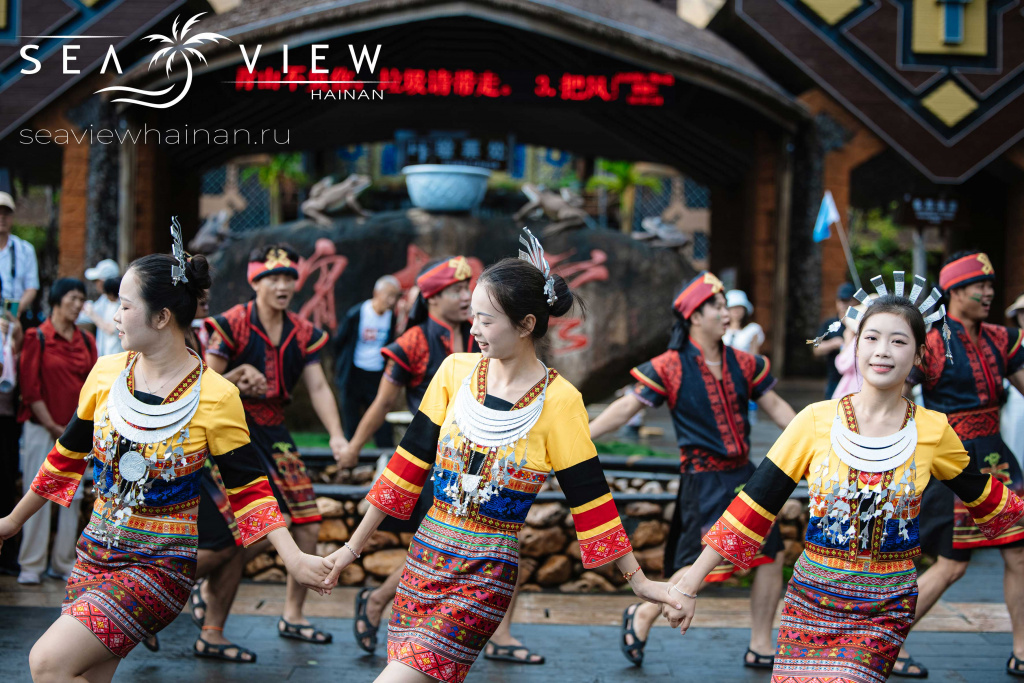
Binglanggu Li & Miao Village is a unique open-air ethnographic park that immerses visitors in the distinctive culture and daily life of the island's indigenous peoples—the Li and Miao. The park has been recreated with utmost authenticity, based on their traditional way of life.
"Betel Nut Valley" (the meaning of Binglanggu) is more than just a tourist attraction—it is the main venue for the traditional festivals "San Yue San" (the Li and Miao Lunar March Third Festival) and the Water Frolic Festival. Renowned for its rich cultural heritage, the park is rightly called Hainan's "living fossil." Its mission is to study, preserve, and share with the world the thousand-year history of the island's ancient peoples, safeguarding traditions while breathing new life into them.
Encounter with Ancient Hainan
The atmosphere of ancient Hainan has been recreated here with astonishing authenticity—from picturesque rice fields to elegant bamboo bridges. The famous boat-shaped houses are seamlessly integrated into the lush landscapes of the tropical forest, creating a sense of traveling back in time.
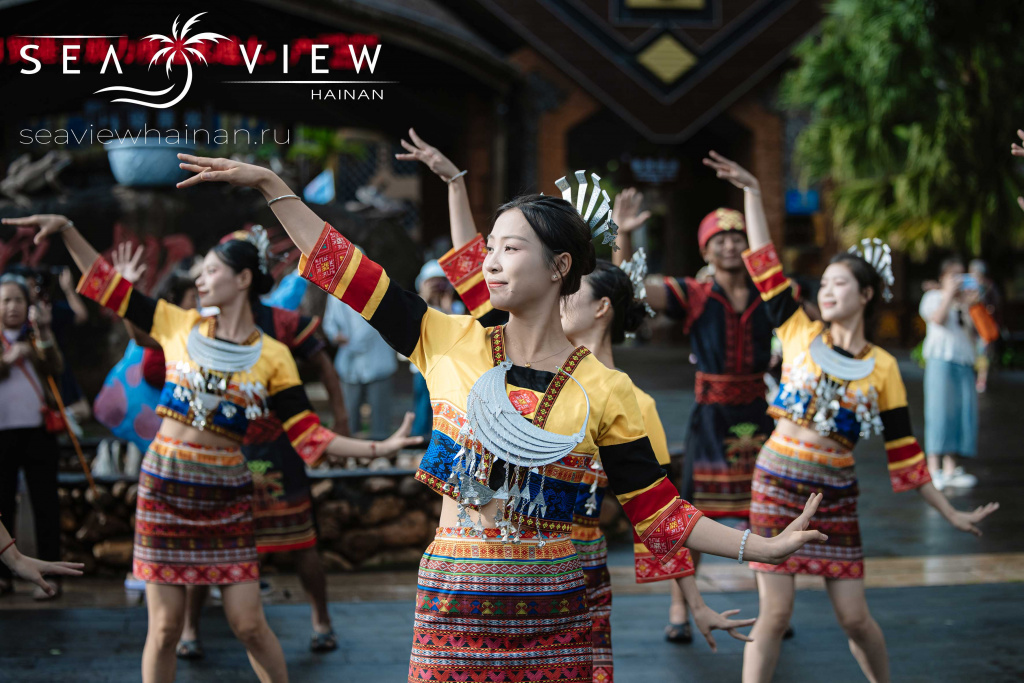
The park opens its doors to guests at 8:30 in the morning, and visitors are greeted right at the entrance with an energetic dance performance! From your very first steps, you are immersed in a remarkably warm and friendly atmosphere, brought to life by local songs, traditional dances, and a captivating fire show.
Symbols and Legends at the Main Entrance
Passing through the main gate, you will see an impressive large panel. In its upper section, magical attributes of the Eight Immortals—legendary figures of the Taoist pantheon—are depicted. At the center of the composition stands the Mighty Deity of Miracles (the Great Deity Ling), flanked by two vases that symbolize peace and prosperity for all seasons.
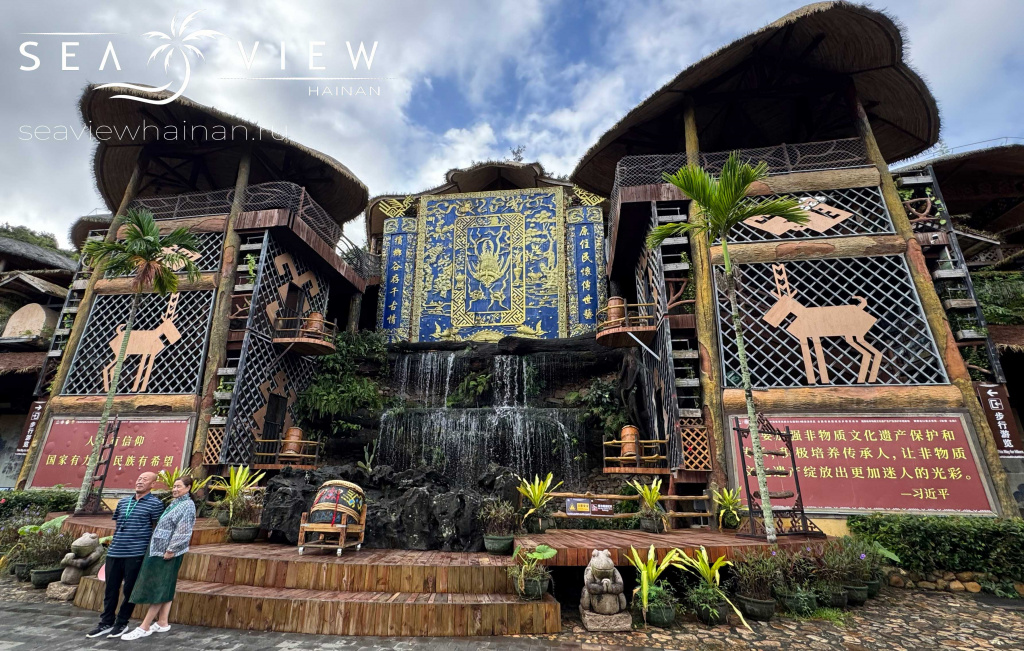
The lower section of the panel is filled with deep symbolism:
-
Frogs represent fertility and numerous offspring
-
Magpies symbolize imminent joy and happy tidings
-
Cranes and pines are traditional symbols of longevity
-
Carps leaping through the Dragon Gate signify success, good fortune, and transformation
All of these images reproduce traditional patterns that can be found on the famous dragon quilts of the Li people.
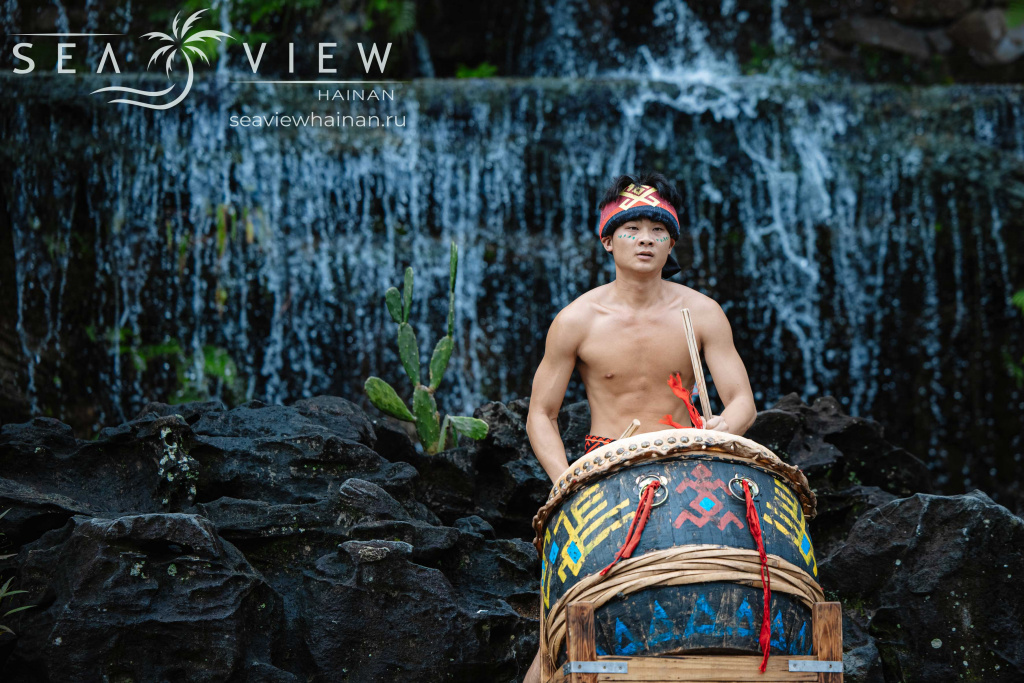
Against the backdrop of this magnificent panel, surrounded by slender betel palms (areca palms), drummers perform, setting the rhythm for the entire journey ahead.
The Sacred Significance of the Betel Palm
These palms play a special role in the culture of the Li and Miao people. Betel nut has long been used in traditional medicine and rituals, but what is most interesting is its place in wedding traditions.
According to custom, the bride's mother would require the future son-in-law to prove his strength and agility by climbing palm trees to harvest the nuts. Sometimes the groom had to conquer as many as 49 trees! Legend has it that climbing ability indicates a strong lower back, which in turn signifies good health and the capacity to have many children. For the small Li population, continuing the family line has always been a matter of survival.
The marriage proposal itself is called "presenting betel nuts." The groom's elders bring betel nuts to the bride's home: if they are accepted, a wedding will take place; if not, the proposal is rejected.
Courtship also took place under the cover of twilight: young men would come to their beloved's doorstep and sing love songs. As for the dowry, it included cattle, betel nuts (the quantity was determined by the bride's mother), and silver jewelry. Incidentally, earrings, bracelets, and bowls were gifted by the groom's family, while the bride prepared the silver headdresses herself.
Music and Dancing Everywhere
Throughout your stroll through the park, you will repeatedly encounter vibrant performances featuring traditional dances, chants, and remarkable musical instruments. We recommend taking a closer look at them—there is plenty worth paying attention to.
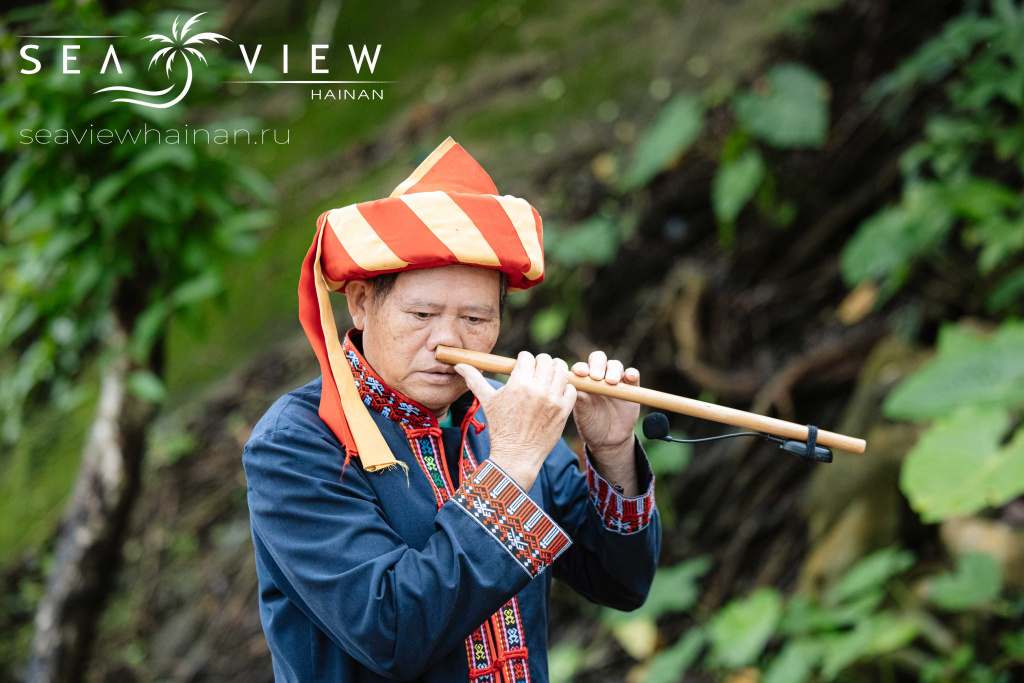
Musicians can use the most unexpected "instruments." For example, ordinary tree leaves: the Li people masterfully extract melodies from them, and this skill is far from easy to achieve! But perhaps the most mesmerizing and unique instrument is the nose flute.
This ancient instrument consists of a bamboo tube with finger holes, and the performer produces sound by exhaling air not through the mouth, but through the nose. The technique is so complex that today only a few master elders possess it. The sound of the nose flute—soft, resonant, and somewhat mysterious—is as if the wind itself is humming ancient legends. According to Li beliefs, the melodies of the nose flute were used to communicate with spirits and express the most heartfelt emotions, especially between lovers. Hearing this instrument live is a great fortune and a unique opportunity to touch the intangible cultural heritage of Hainan.
Textile Treasures: The Art of Li Brocade Weaving
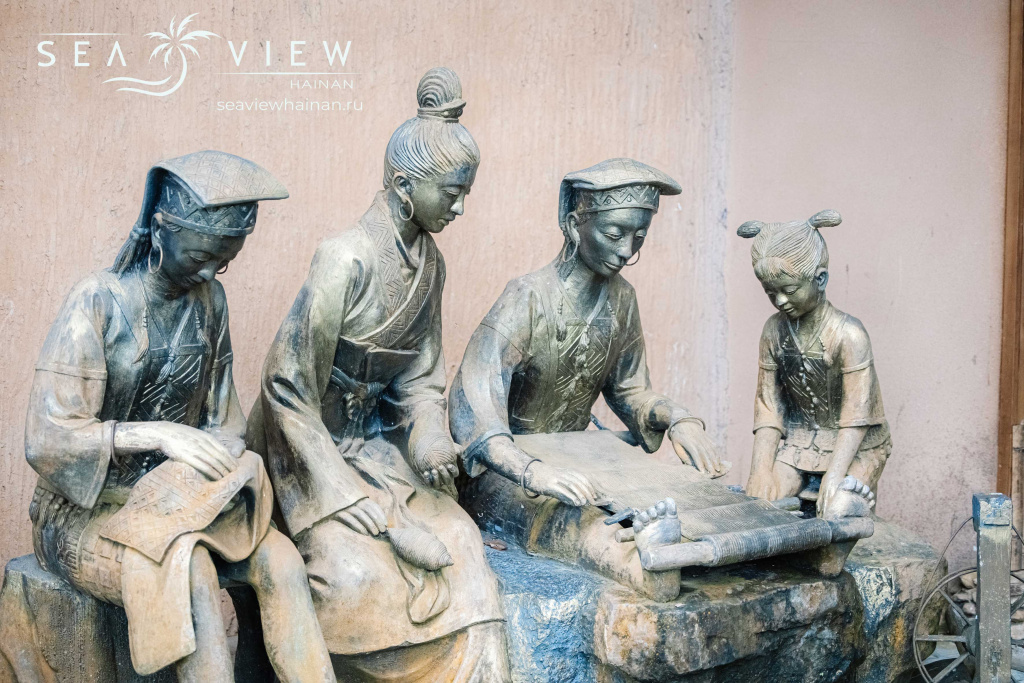
In addition, throughout the village you can often encounter elderly women weaving the famous Li brocade. The weaving craftsmanship of the Li people deserves special attention, as it has been officially recognized by UNESCO as a Masterpiece of the Intangible Cultural Heritage of Humanity. Traditional techniques of spinning, dyeing, weaving, and embroidery have been passed down here for over 3,000 years, earning Li brocade the title of a "living fossil" of China's textile industry.
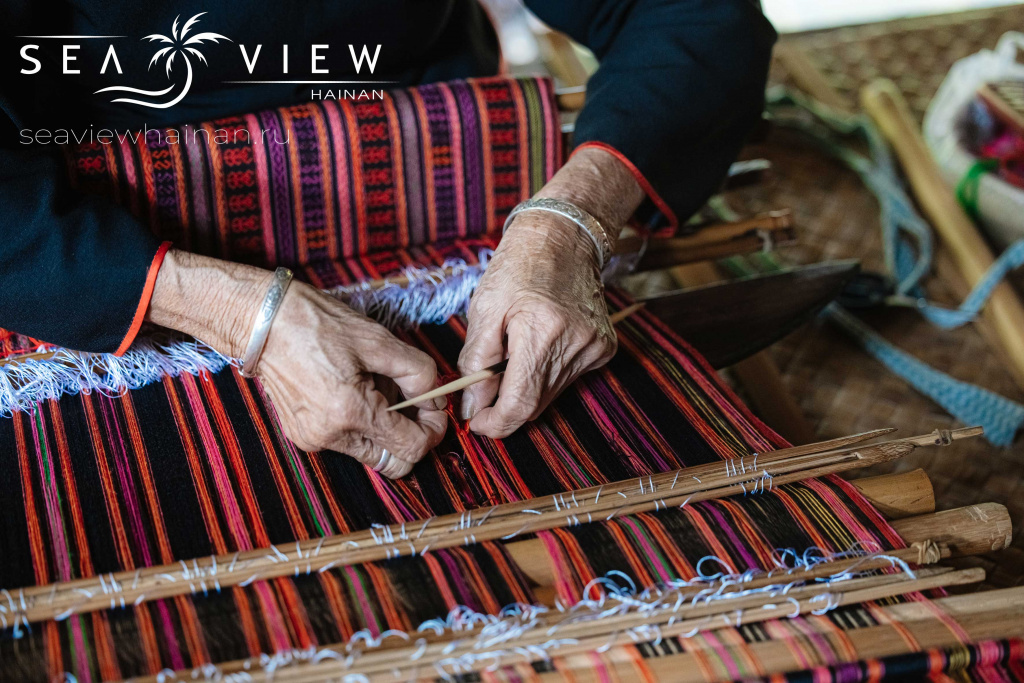
Li women create their remarkable textiles on simple looms, using only natural materials: cotton, hemp fibers, and natural dyes extracted from the leaves, bark, and roots of plants. The technique encompasses several highly complex methods—basic weaving, double-sided embroidery, and jacquard weaving. But what is most astonishing is that the patterns of Li brocade encode an entire history of the people. Since the Li had no written language, the designs on fabric served for centuries as a means of preserving legends, beliefs, traditions, and even the distinctions between the five main dialects of the island.
This art has had an incredible influence on the global history of weaving. In the 13th century, a woman named Huang Daopo (1245–1330), who fled persecution and arrived in Hainan, lived there for over thirty years, learned spinning and weaving techniques from the Li people, and mastered new processes with exceptional skill. Upon returning to her homeland (in present-day Xuhui District, Shanghai), she organized advanced spinning and weaving production based on her innovative developments and the refined textile technologies of the Li people. She passed these techniques on to the residents of her native land, thanks to which the Songjiang area became a center of China's national cotton industry. Huang Daopo made a tremendous contribution to the development of China's textile industry.
Tree Bark as a Predecessor to Fabric
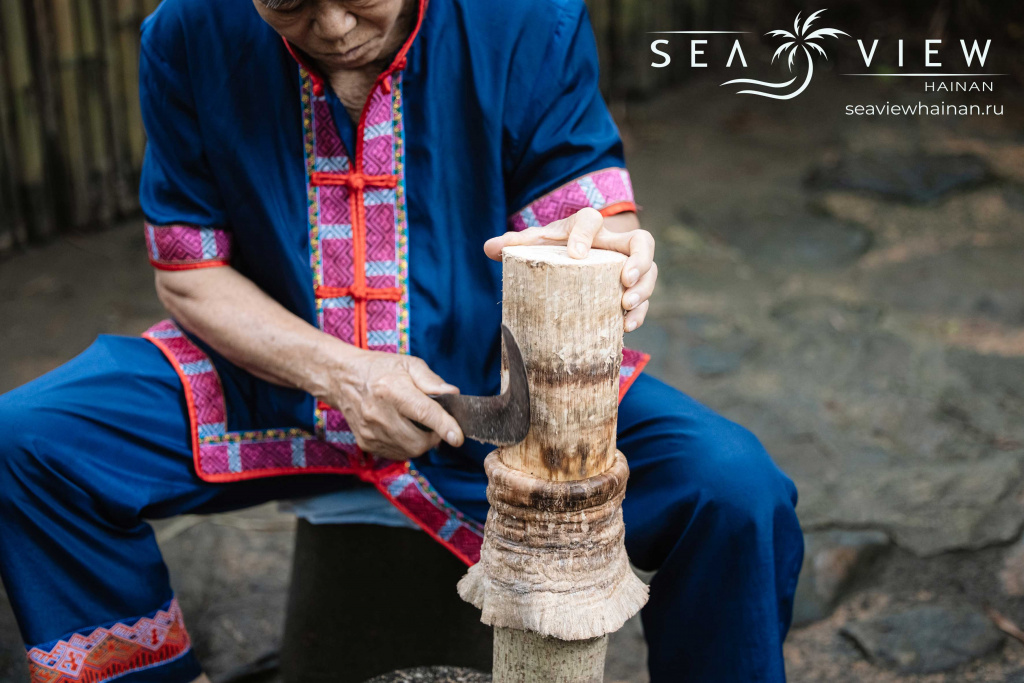
Even before the use of cotton and hemp, the Li people learned to process tree bark to produce a non-woven material—the predecessor of fabric. And some of these items have survived for centuries! To make their first garments, they used the bark of a tree from the mulberry family—Antiaris toxicaria, also known as the upas tree. The milky sap of this tree is extremely poisonous: it can cause immediate poisoning and even death if a person or animal accidentally ingests it or if it enters the body through wounds. It is no coincidence that this plant is called the "poison arrow tree"—local hunters used its milky sap as a poison for arrowheads.
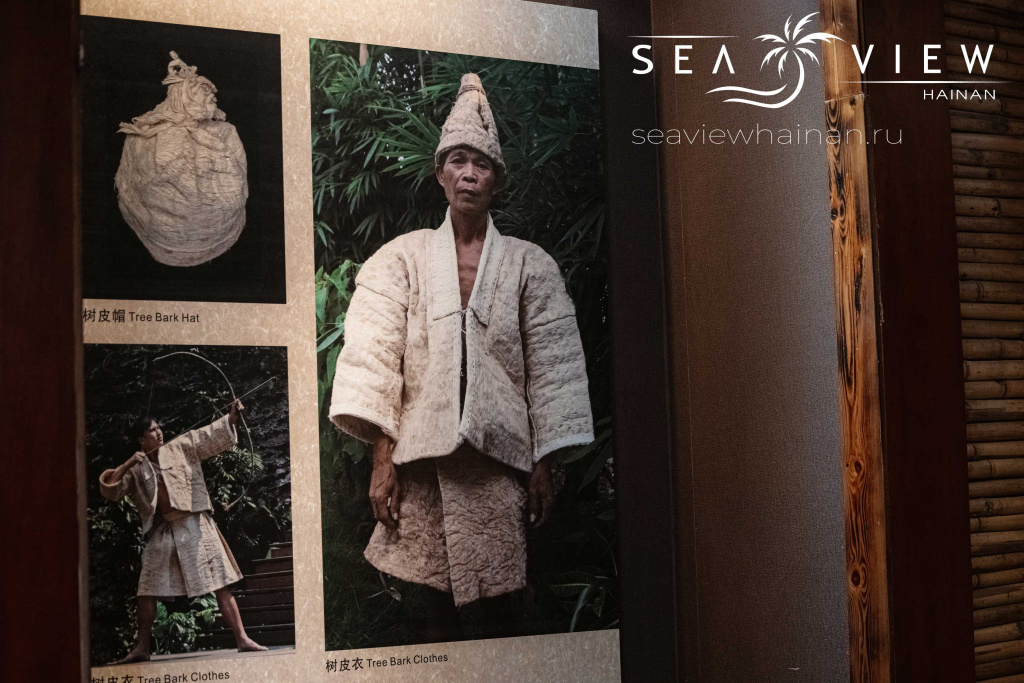
Paradoxically, everyday items made by the Li people from the bark of this poisonous tree—such as clothing, aprons, and blankets—possess natural antibacterial properties and the ability to self-clean. This explains why some rare non-woven artifacts made from the bark of Antiaris toxicaria have survived for many centuries and even millennia.
The Dragon Quilt: An Imperial Gift from Hainan
Special mention deserves the "dragon quilt" (longbei)—the most precious form of Li textile, which combines all the techniques of weaving, dyeing, and embroidery in a single piece. Thanks to its exceptional quality and cultural significance, such quilts were presented as tribute to the imperial court in ancient times. According to historical records (the Chronicles of the Imperial Assemblies of the Song Dynasty), as early as 1133, tribute from Hainan Island accounted for more than half of all textile treasures delivered to the Chinese emperor.
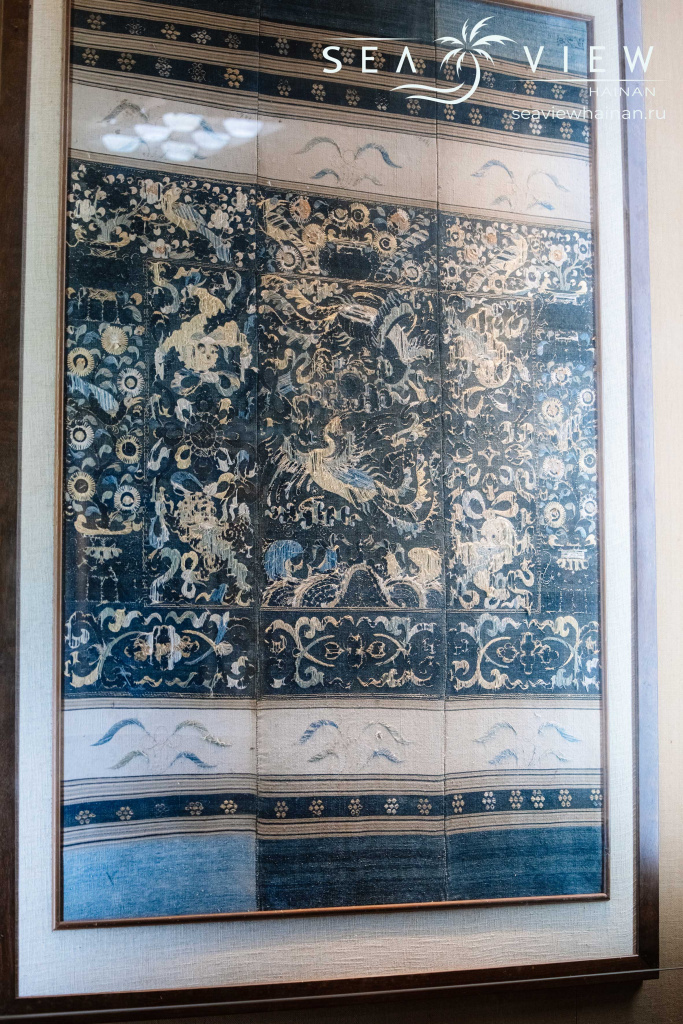
Why was the quilt named "dragon"? The dragon (Fuxi) is considered the legendary ancestor of the Chinese people and has always been regarded as a symbol of the nation. China is rightly called the homeland of the dragon, and its inhabitants—the descendants of this powerful creature. Thousands of years ago, ancestors saw the dragon as a deity capable of becoming invisible and controlling the forces of nature, serving as a bridge between heaven and earth. The dragon embodies the ideal harmony between man and nature, bestowing happiness and longevity upon people. It is no wonder that its image is so beloved in folk traditions—from dragon dances to dragon boat races. For the Li people, the dragon is also a revered ancestral totem.
The dragon quilt is considered the pearl of Li brocade due to the skillful combination of four traditional techniques: spinning, dyeing, weaving, and embroidery. The technological process is so complex that each such quilt becomes a unique work of art. It is not merely fabric—it is a vital carrier of Li culture, occupying a place of honor in the treasury of Chinese national art.
A Record-Breaking Dragon Quilt
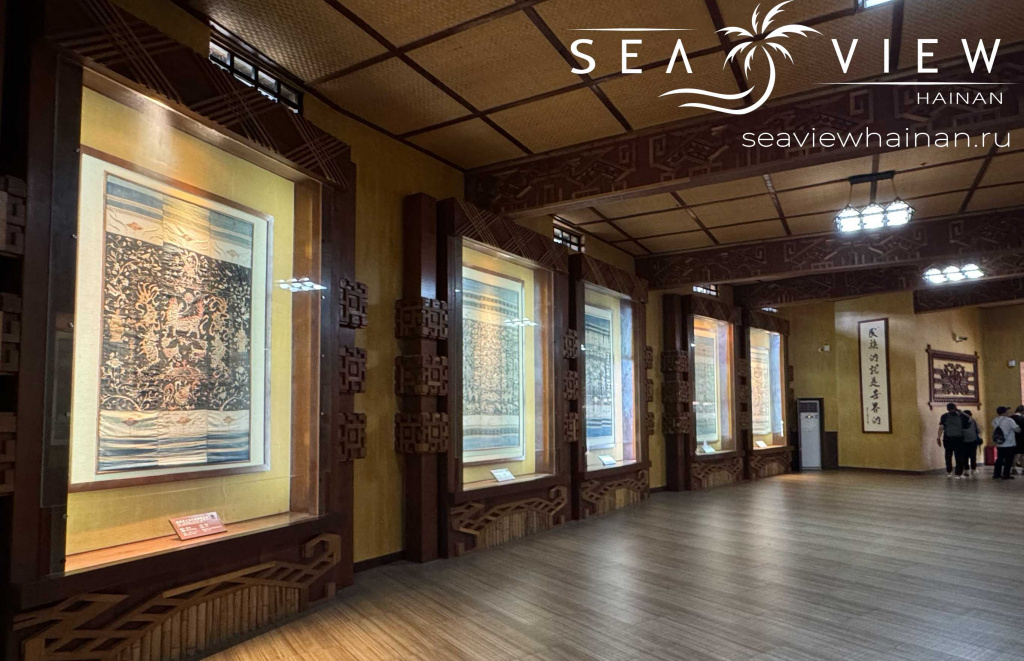
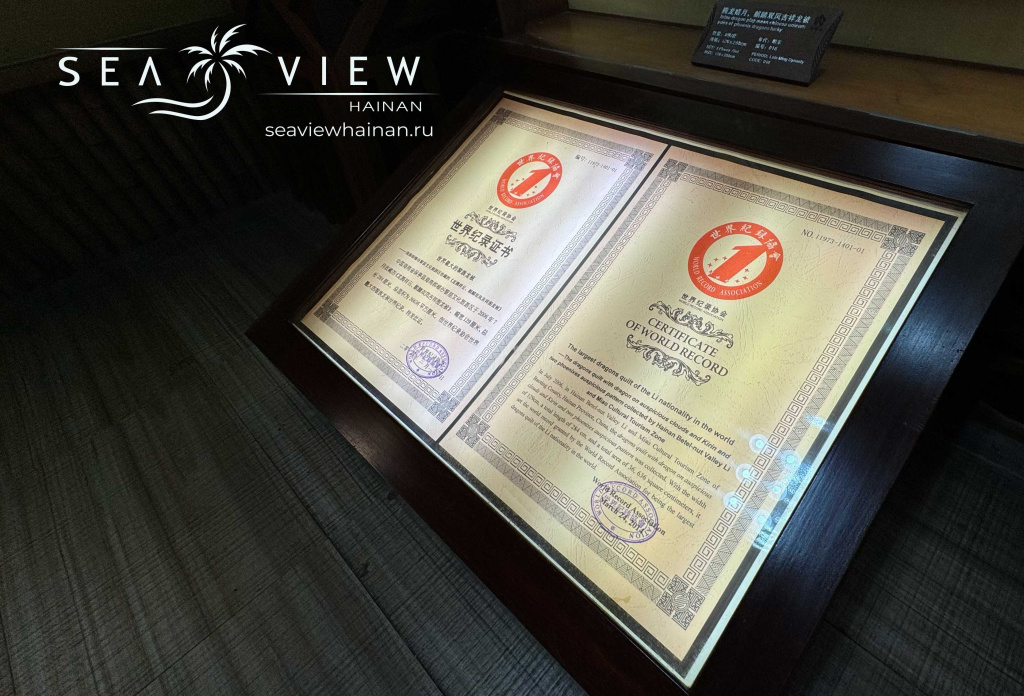
One particular piece that inspires special admiration and has earned worldwide recognition is the largest Li dragon textile, titled "Dragons in Clouds, Qilin, and Two Phoenixes." Its dimensions are impressive: 284 cm in length and 129 cm in width, with a total area of over 3.6 square meters!
According to an expert from the Intangible Cultural Heritage Protection Center of Hainan Province, this quilt was created at the end of the Ming Dynasty and originally consisted of four pieces sewn together. The richness and symbolism of its patterns are astonishing: here one can find "Two Dragons Playing with a Pearl," "Two Phoenixes Greeting the Sunrise," a qilin (Chinese unicorn), "Carps Leaping Through the Dragon Gate," blossoming flowers, peaches of the four seasons, the Buddhist lotus… The colors are so vivid and lively that it seems as if the patterns might come to life at any moment. Each element tells its own story—about the daily life, religious beliefs, and cherished dreams of the Li people.
The Revival of an Ancient Art
Today, the art of Li brocade weaving is experiencing a true revival. Over 470 officially recognized inheritors of the craft and more than 20,000 master weavers continue the traditions of their ancestors. Works by contemporary weavers have already conquered global runways: Li patterns have adorned collections by renowned designers at Paris Fashion Week. Thus, this ancient craft is finding new life, proving that true art fears neither centuries nor distances.
Li Tattoos: "Dunhuang Frescoes" on Skin
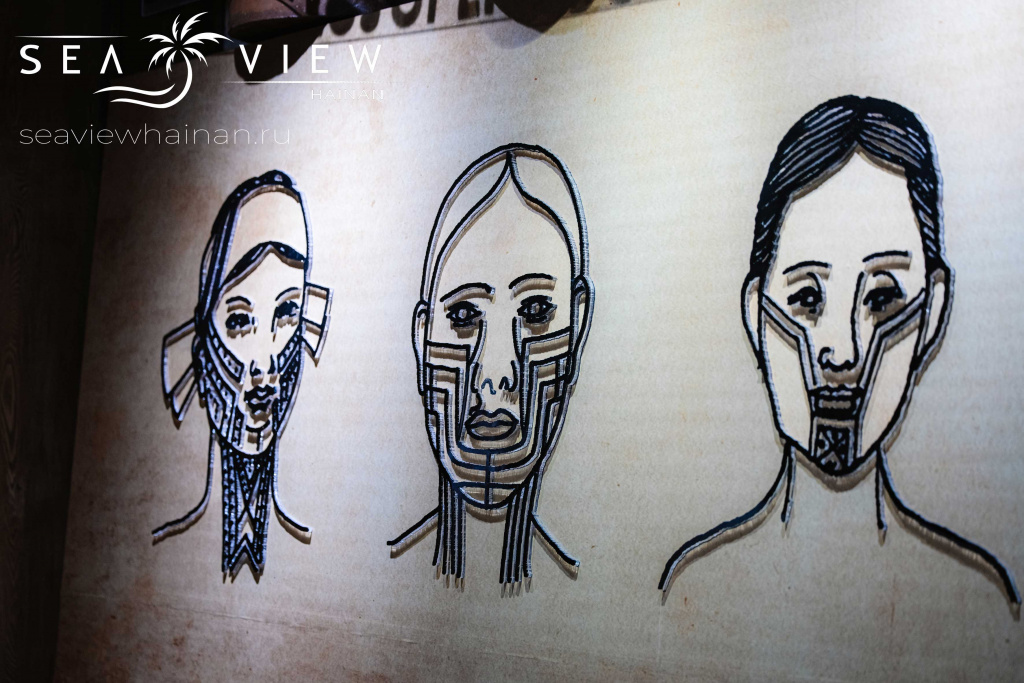
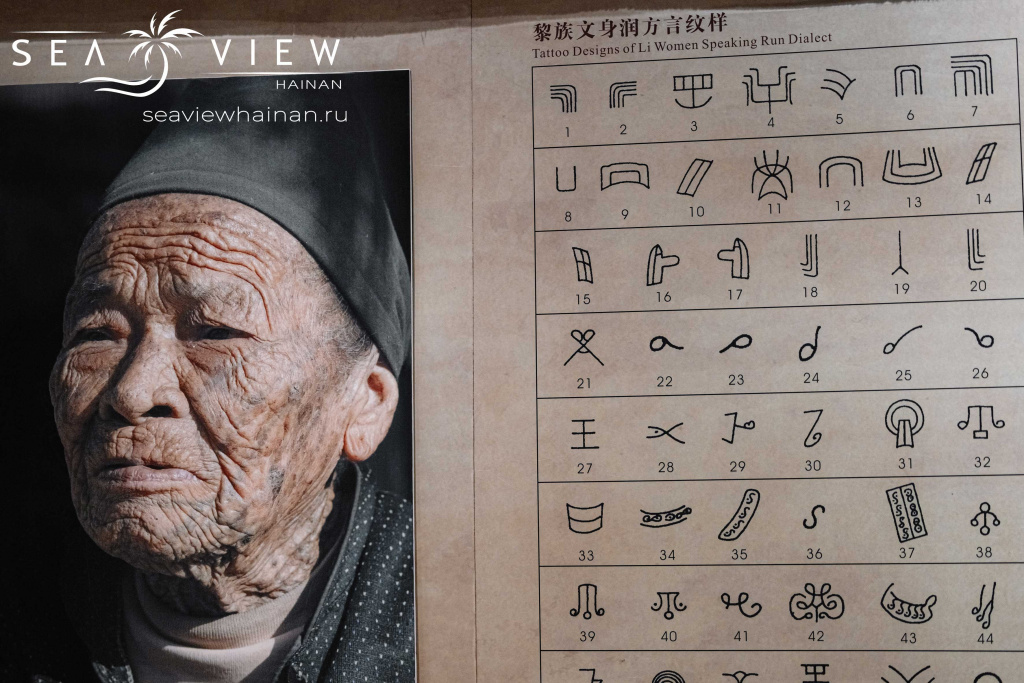
But it is not only the patterns of Li brocade that hold the secrets of this ancient people. Equally encoded messages are carried by the tattoos on the faces and bodies of Li women. This is a unique phenomenon in world culture: the Li people remain the only ethnic group in China that "uses human skin as a medium for recording ancestral marks." Anthropologists call these tattoos the "Dunhuang Frescoes of Hainan Island"—so valuable are they for understanding the history and traditions of the people.
A Journey Spanning 3,000 Years
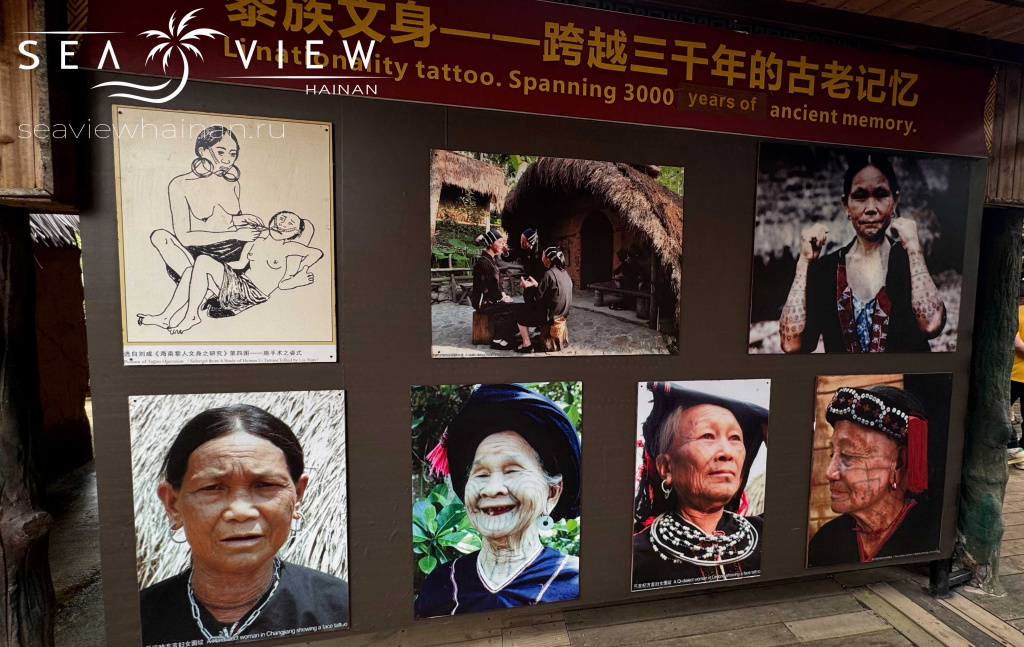
The ancestors of Hainan's Li people belonged to the ancient Yue ethnic group, among whom the custom of tattooing existed. Around 3,000 years ago, one branch of the Baiyue tribes—the Leiyue—migrated to Hainan Island and became its first settlers, preserving this tradition. The history of Li tattooing is documented in Chinese classical works across many dynasties—from Han (206 BCE) to Qing (1644–1911). It was written about in famous texts such as the Classic of Mountains and Seas (Shan Hai Jing), the Strategies of the Warring States (Zhan Guo Ce), and the Records of the Grand Historian (Shi Ji).
Skin as the Book of the Clan
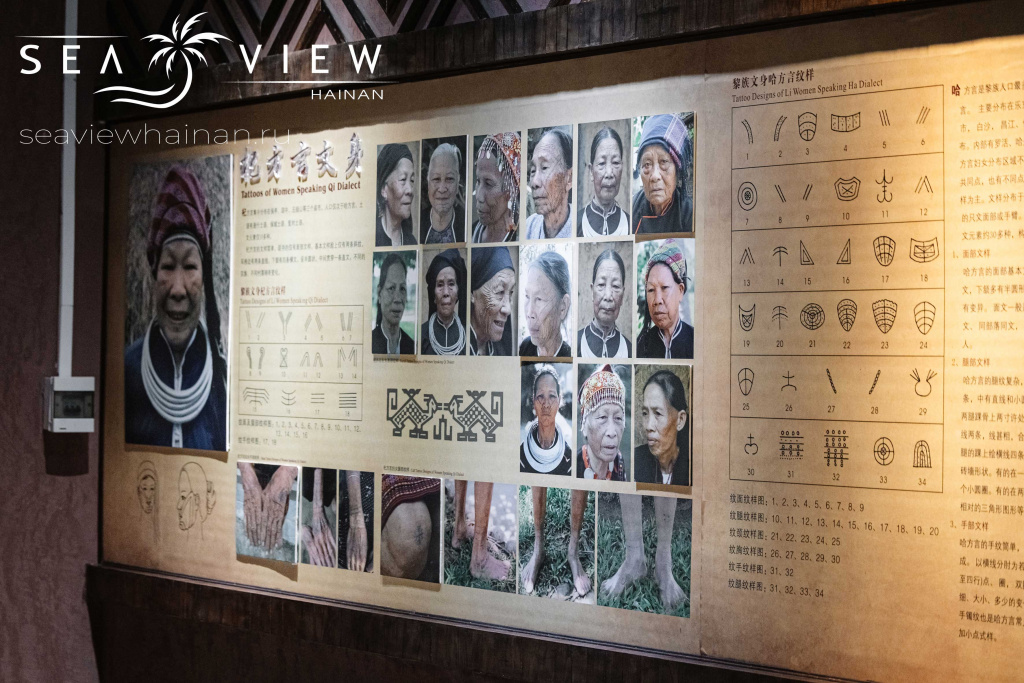
What was the meaning behind this tradition? By applying ancestral symbols and totems to their bodies, people imbued them with the most profound meanings: prayers for life, hopes for happiness, a desire to ward off misfortune, and, of course, a yearning for beauty. Tattoos served as a form of identification: from the patterns, one could trace a person's lineage, which helped prevent incestuous marriages. The more tattoos a girl had, the more beautiful she was considered—sometimes the patterns covered more than 80% of her body.
Suffering for Beauty
Young girls would begin receiving tattoos around the age of eight. The process was painful and required incredible patience. First, the pattern was drawn onto the skin, then thorns from white rattan were used to repeatedly pierce the skin, rubbing plant-based dyes into the wounds. If the color did not set on the first attempt, the procedure was repeated again and again until the desired shade was achieved. To keep the girl from moving, the elderly women of the community would hold her down on the ground—for even the slightest motion could make the pattern uneven and unattractive. After the tattooing, a special tree sap was applied to the wounds for disinfection. In an era when modern medicine was out of the question, this method saved lives by preventing deadly infections.
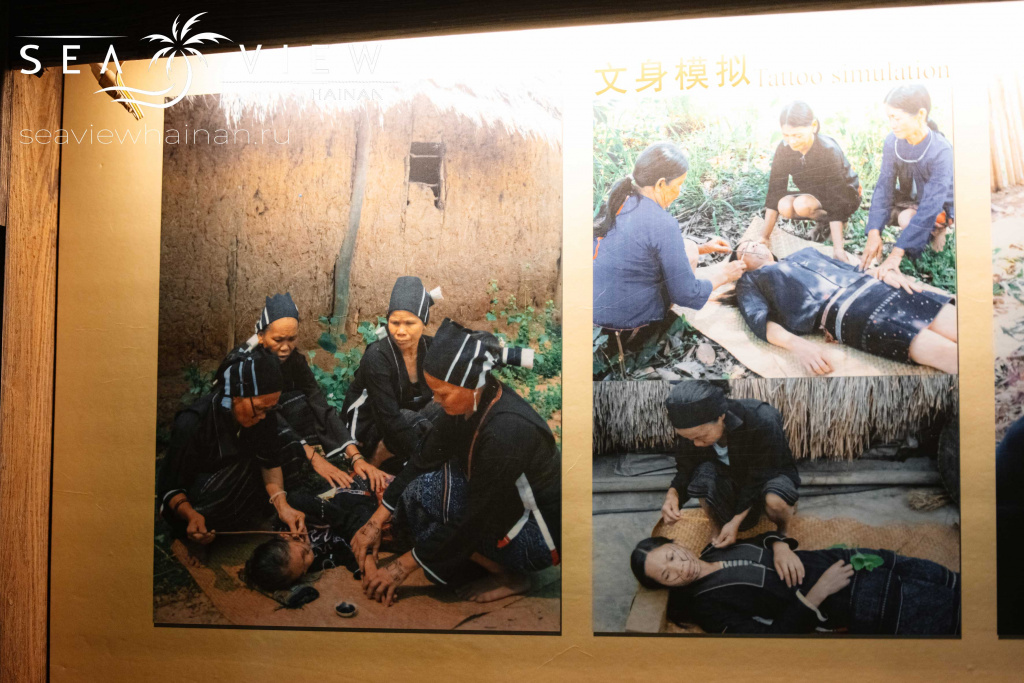
A Dying Tradition
During the Republic of China era (1911–1949), Li women gradually began to abandon the practice of tattooing. And after the founding of New China (1949), the custom was completely prohibited as harmful—similar to the foot binding practiced by the Manchu. Today, among the Li people, only a few elderly women with tattoos can still be found. They are living witnesses of a bygone era, keepers of an ancient tradition that we can see with our own eyes while the opportunity still exists. Each of these grandmothers is a true treasure trove of history, and meeting her becomes an unforgettable moment of connecting with a living culture millennia old.
Boat-Shaped Houses: Architecture in Harmony with the Landscape
If you pay attention to the surrounding scenery of the park, you will notice remarkable structures everywhere, as if lifted from the pages of ancient legends. These are the traditional dwellings of the Li people—boat-shaped houses that blend seamlessly into the natural landscape and have become an integral part of the atmosphere here. Their silhouettes resemble upturned boats that have docked on the land amidst the tropical greenery.
This type of dwelling received its name due to its external resemblance to an overturned boat lying on the ground. In the Li dialect, such a house is pronounced "Lungoulan." It is built from natural materials: bamboo, wood, clay, thatch, tree branches, and straw.
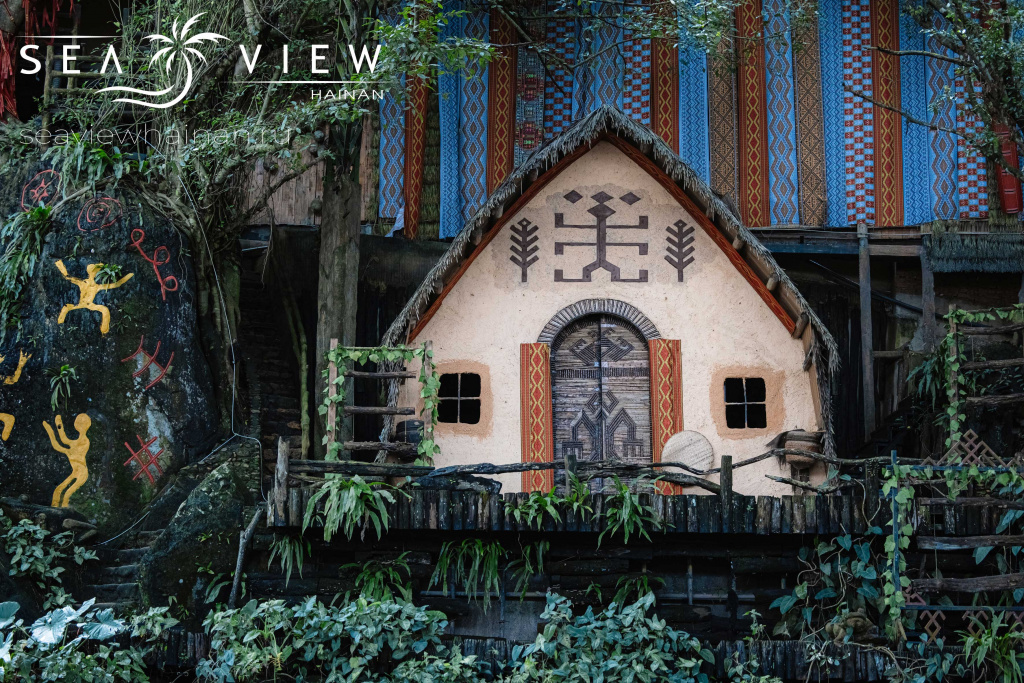
The interior space is divided into three parts: the front section includes the kitchen and living area, the middle serves as the bedroom, and the rear functions as a storage room for tools and other useful items. Such a well-thought-out layout allowed for managing the household with maximum efficiency.
The wall construction technique deserves special attention. The walls were made from a very unique material—a mixture of clay and rice straw. This natural blend was mixed by foot, then the walls were hand-molded from it. The roofs were covered with thatch; when properly laid, it reliably protected the hearth and the inhabitants from rain and the scorching sun.
The method of building boat-shaped houses was passed down from generation to generation for millennia. Today, this unique technique is included in China's National Intangible Cultural Heritage Protection Project. As you pass by these remarkable structures, take a close look at their forms—every line holds the memory of ancestral wisdom, of a people who succeeded in creating the ideal dwelling in harmony with nature.
Wine: Rice Nectar with a Thousand-Year History
Seal your acquaintance with local customs and traditions by enjoying a glass of rice wine in the wine cellar! And if you like it (which is almost inevitable), you will surely take a bottle or two as a souvenir for your friends.
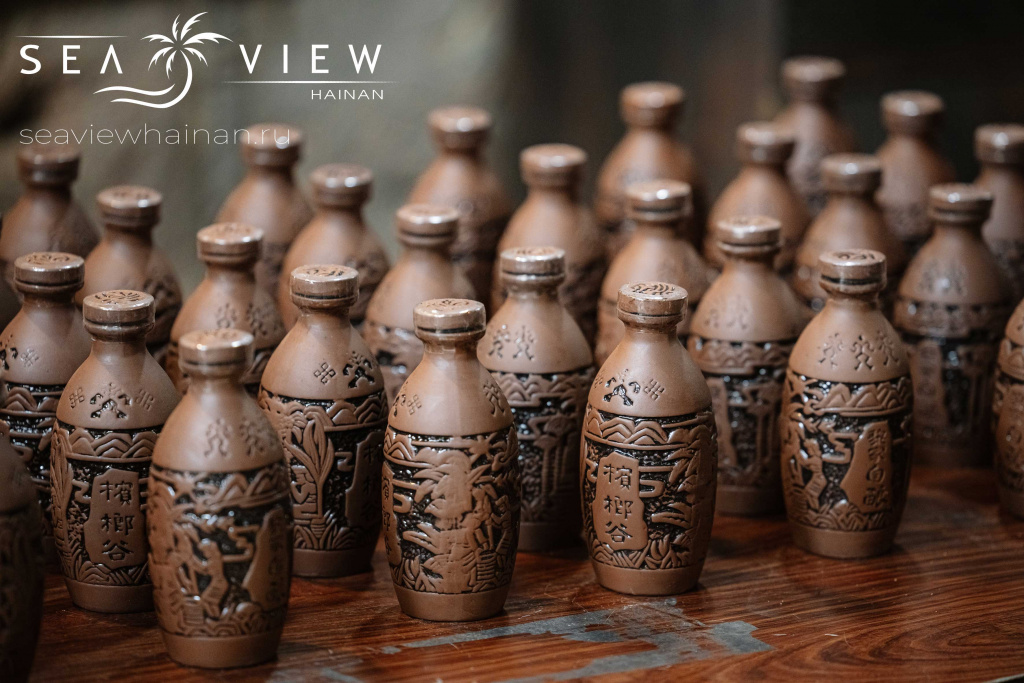
Rice wine occupies a central place in the culture and daily life of the Li and Miao peoples. It is not merely a beverage, but an integral part of rituals, festivals, and hospitality. Its base is a special variety of rice—shanlandao (mountain rice)—which the Li people have cultivated for millennia on mountain slopes using slash-and-burn agriculture. Just think about it: how much wisdom is required to harvest such a precious crop in harmony with nature! Shanlan rice is known for its sweet, fragrant, and soft texture, but its yield is extremely low. Nowadays, few people actively cultivate it; most grow it on a small scale for personal use, often for making wine.
The technique of making rice wine is passed down from generation to generation and involves carefully observed steps: soaking selected glutinous rice, steaming it, mixing it with a special starter culture (qu), and fermenting it in a cool place. While the wine is being brewed, tree branches are hung at the entrance to the house, serving as a sign forbidding entry to outsiders. The resulting beverage has a sweet, rich flavor and low alcohol content—an ideal option for everyday hospitality.
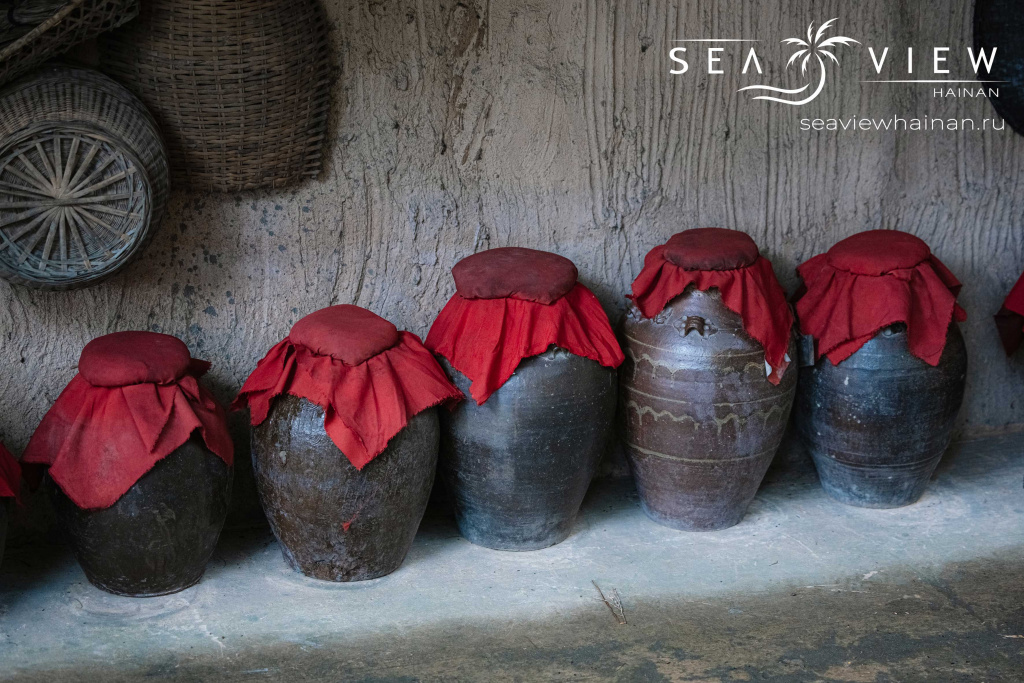
Rice wine takes on special symbolic significance during traditional festivals, such as the famous March Third Festival of the Li and Miao. Here, it becomes an essential element of feasts: it is used to welcome honored guests and to make offerings to ancestors. Rice wine is a true "living heritage," embodying the history, labor, and philosophy of these peoples.
Wine Cellars: Where Magic is Born
The Li people typically build their wine cellars right in the fields where bananas, sweet potatoes, and yams grow. Picture this scene: amidst the tropical greenery stand clay jars filled with future wine, covered with tree leaves, most often banana leaves. The jars are then sealed with clay on top—creating an ideal microclimate for aging.
And this is where true magic begins! The longer the wine is stored, the darker its color becomes—from crystal clear, through amber-yellow and ruby-red, to a deep, rich burgundy. Along with the color, the alcohol content rises, and of course, the flavor becomes richer and more interesting.
Speaking of quality: shanlan wine, made using this traditional method by the Li people of Baoting Autonomous County, once received the prestigious "Golden Horse" award at an international wine fair in France! So when you choose a bottle as a souvenir, you are taking home not just a local beverage, but a true internationally recognized treasure.
Silver: Jewelry That Holds the Soul of the People
When searching for memorable souvenirs, be sure to visit the silverware shop. Here you will find not just a piece of jewelry to give as a gift, but a true artifact that preserves the skill of local artisans. By the way, the name of each craftsman can be seen displayed above the counter—here, individuality is valued, and they take pride in their artisans!
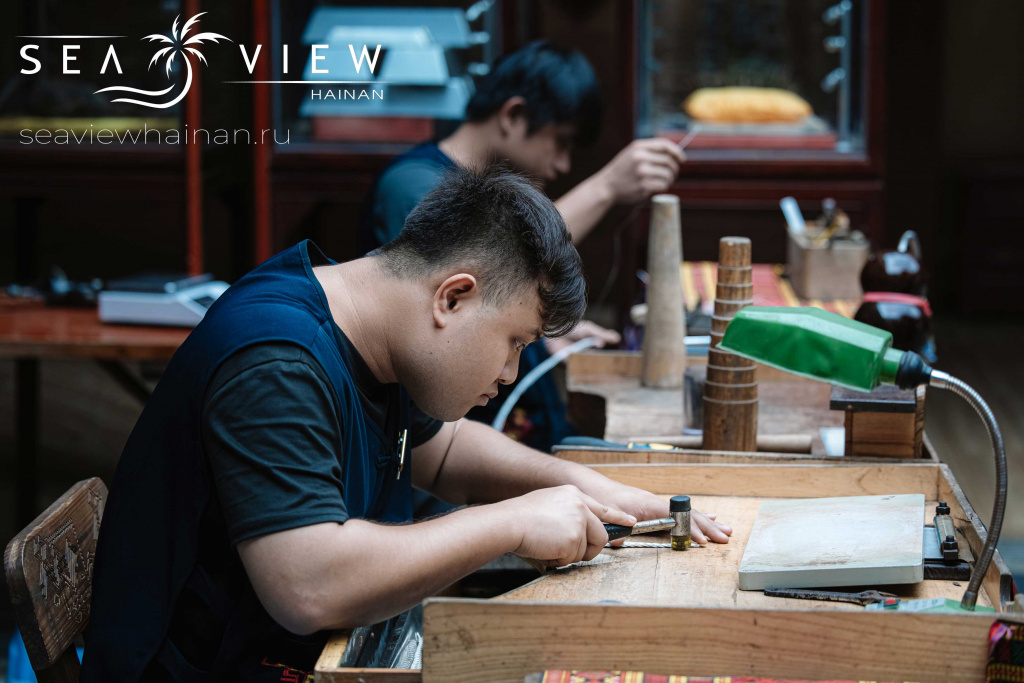
Silver holds a special place in the culture of the Li and Miao peoples. It is not merely jewelry, but an important cultural symbol, a carrier of historical memory, and even a marker of social status. Among the Miao people, the tradition of wearing silver ornaments dates back over 400 to 600 years and was added to China's National Intangible Cultural Heritage list in 2006.
Silver as the Ancestors' Safe
For the Miao, silver embodies centuries of history. According to belief, the Miao ancestors, forced into constant migration and warfare, would convert all their possessions into silver and wear it on their bodies. A convenient way to preserve wealth, right? Just imagine: the massive ornaments that young women wear for weddings and major festivals can weigh anywhere from 3.5 to 15 kilograms! The set includes elaborate headpieces, collars, earrings, and bracelets—a true jewelry ensemble that both adorns and serves as family capital.
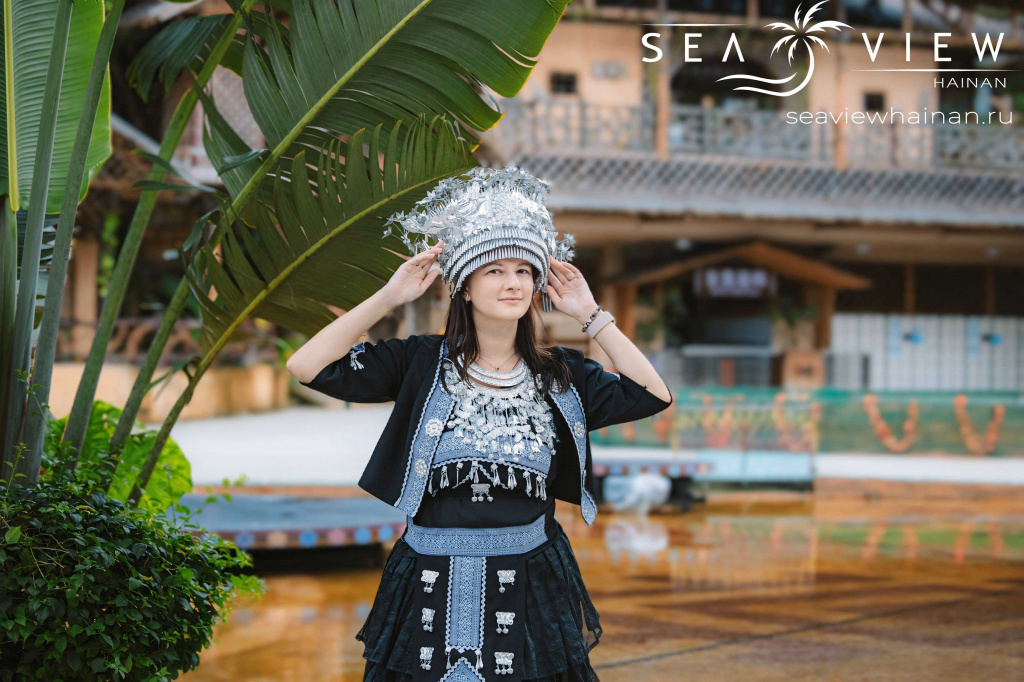
The Language of Patterns
Take a closer look at the patterns on Miao silver—each one carries deep symbolic meaning. Popular motifs (butterflies, dragonflies, birds, fish, and horses) reflect ancient beliefs and history. For example, the horse is venerated as the animal that helped the Miao ancestors complete their great migration. And the famous "horned" headpiece, surprisingly, actually symbolizes bird wings! Mythological creatures also appear—such as a dragon with the head of a centipede or an ox. These images speak to an ancient animistic worldview, in which people believed that everything around them possessed a soul.

Handicraft of the Highest Order
The process of creating these masterpieces is an extremely complex craft, involving up to 30 stages: casting, forging, wire drawing, twisting, inlaying, and polishing. And artisans do all of this entirely by hand, without the use of pre-made molds! Each piece is unique and carries the warmth of its creator's hands.
Although less is known specifically about the silversmithing tradition of the Li people, it is safe to say that within the shared cultural space of Hainan, silver jewelry was no less prized. It was incorporated into traditional costumes and used as talismans. The metal itself symbolized purity, light, and protection from evil spirits. So, when you choose a silver souvenir, you are taking home not just a beautiful object, but a piece of ancient beliefs and a wish for goodness and protection.
Rattan Weaving: An Art Born from Nature
Another ancient craft for which the Li people are renowned is rattan weaving. This flexible tropical vine has for centuries served as the primary material for local artisans in creating everyday objects. Baskets, mats, hats, furniture, and even elements of dwellings—all of these were skillfully woven by hand, without a single nail or drop of glue.
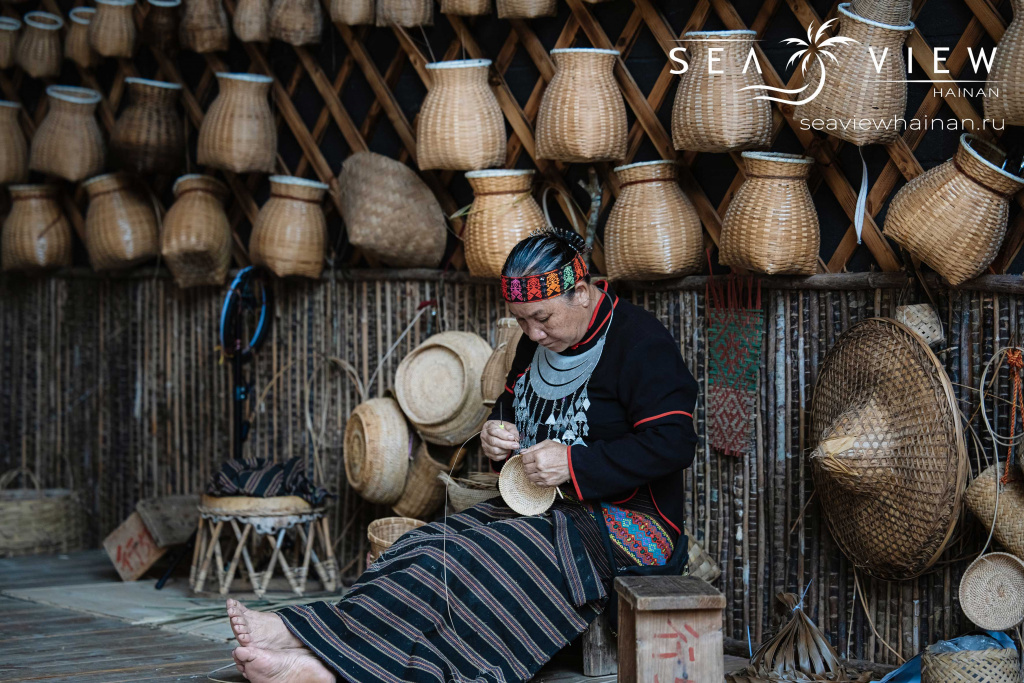
Weaving techniques were passed down from generation to generation, and the secrets of processing rattan were preserved within families. Artisans skillfully combined the strength and flexibility of the material to create objects that would last for decades. Today, you can witness this mesmerizing process with your own eyes: the nimble hands of craftswomen transform an ordinary vine into an elegant basket or an openwork box right before you!
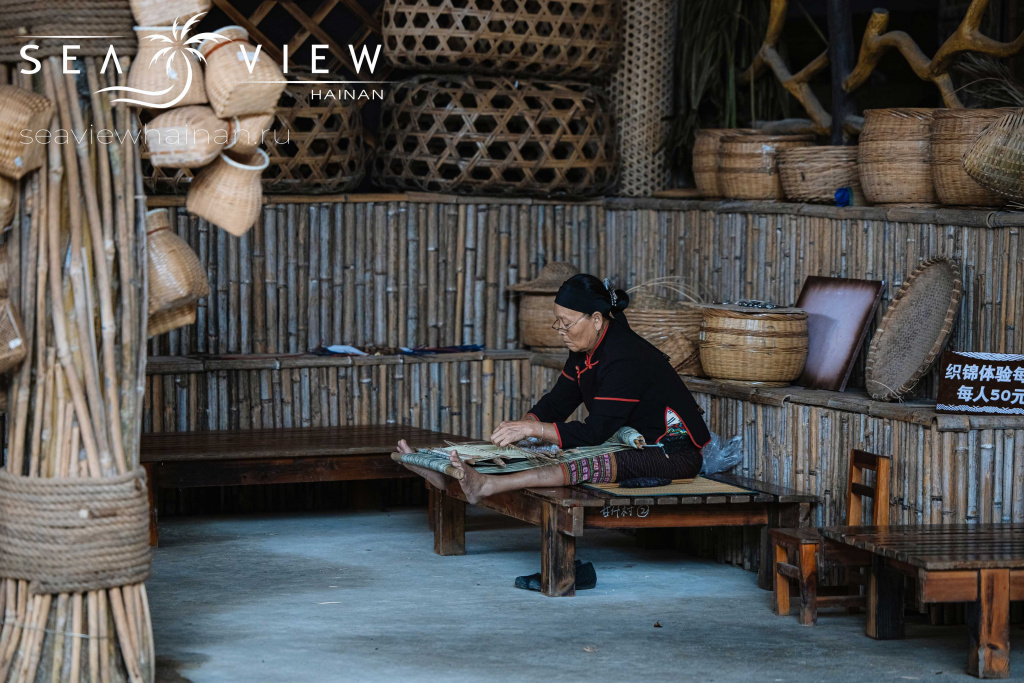
In addition to these local artifacts, you can also purchase finished rattan products—from practical baskets to decorative panels. And many other souvenirs to suit every taste! Each item carries the warmth of the artisan's hands and a piece of the soul of this ancient people.
"Binlang – Ancient Melody": A Journey Through Millennia
After you have had your fill of wandering through the park, make your way to the main show—"Binlang – Ancient Melody." Believe us, this is something worth staying for!
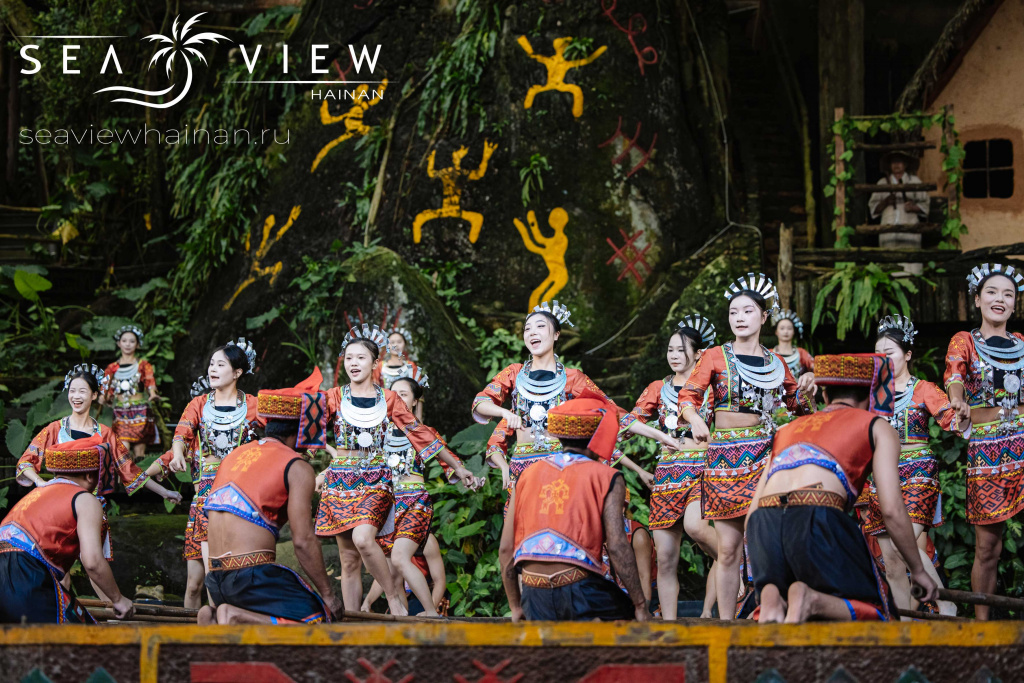
Binglanggu is the dream of the Li people, brought to life. And this large-scale, authentic open-air theatrical performance will be a true journey through Hainan's three-thousand-year history for you. Imagine sitting under the open sky as an original tableau of the labor and beautiful life of the local peoples unfolds before your eyes.
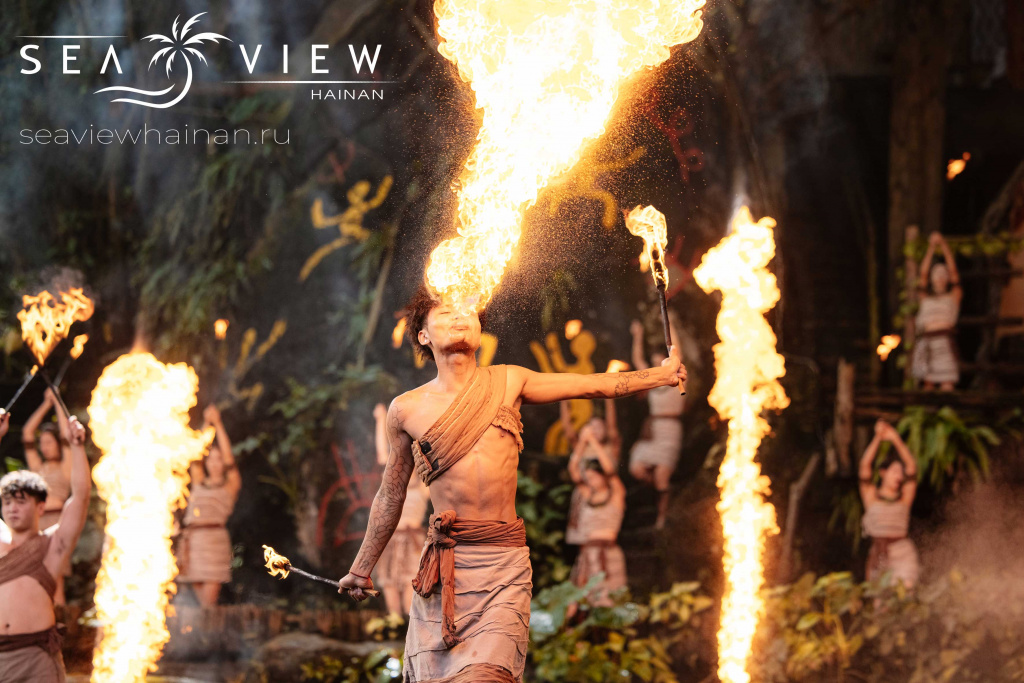
This is not just a show, but a repertory performance that preserves disappearing intangible heritage. Through vibrant songs and dances, the creators of the production have skillfully woven elements of Hainan's intangible cultural heritage into the action: ancient myths and legends, traditional costumes, crafts, and scenes of everyday life. It is as if you are flipping through a living history book, where each page comes to life right before your eyes.
By the way, the show has already conquered the world! After tours in South Korea, Dubai, Canada, Italy, Russia, and other European countries, it has gained international fame. So you have a unique opportunity to see with your own eyes what audiences around the globe have admired—the authentic history and culture of the Li and Miao peoples.
Practical Information:
Performance times: First show — 11:30, Second show — 16:30
Venue: Main stage of the Binglanggu tourist area
Duration: Approximately 50 minutes
Plan your itinerary so as not to miss this spectacular event. And don't forget to charge your camera—there will be plenty of impressions to capture!
Entertainment for the Bold and Active
The Miao Village has also prepared its own show—and it is truly breathtaking! Here, you will be amazed by incredible feats: climbing a mountain of swords, walking on broken glass, strolling barefoot across a white-hot steel plate, and even licking hot metal with their tongues! All of this demonstrates the fearlessness and indomitable spirit of the Miao people. Watching these acts, you begin to believe that truly nothing is impossible for them.
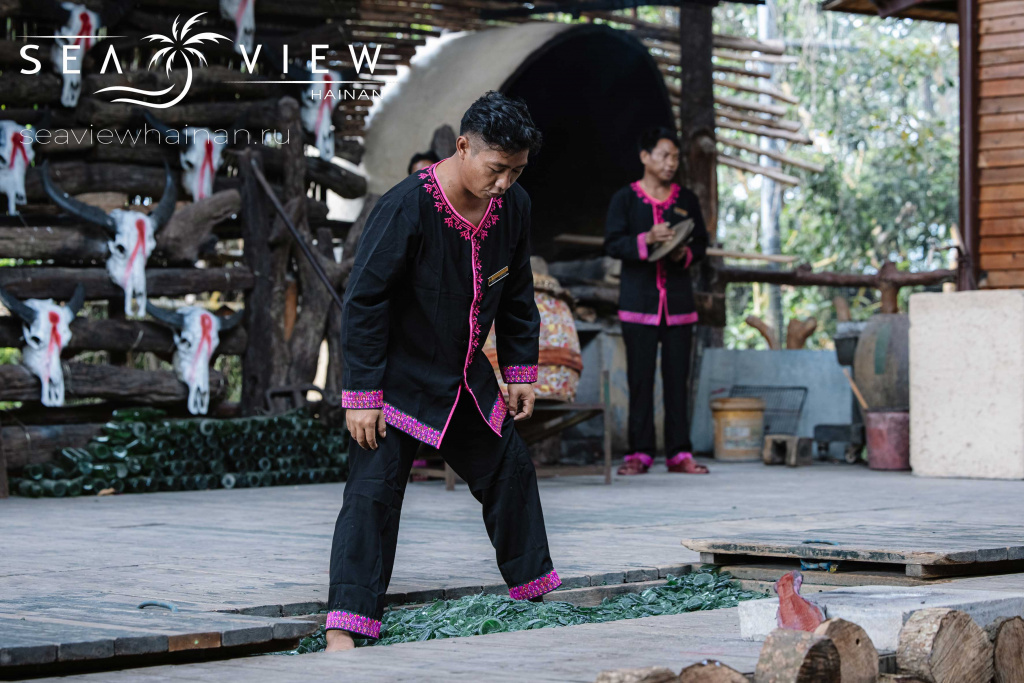
In addition, performances by dancers, singers, and other artists take place throughout the park, immersing you in an atmosphere of a non-stop celebration. Wherever you turn—music fills the air, vibrant costumes flash before your eyes, and smiles shine all around.
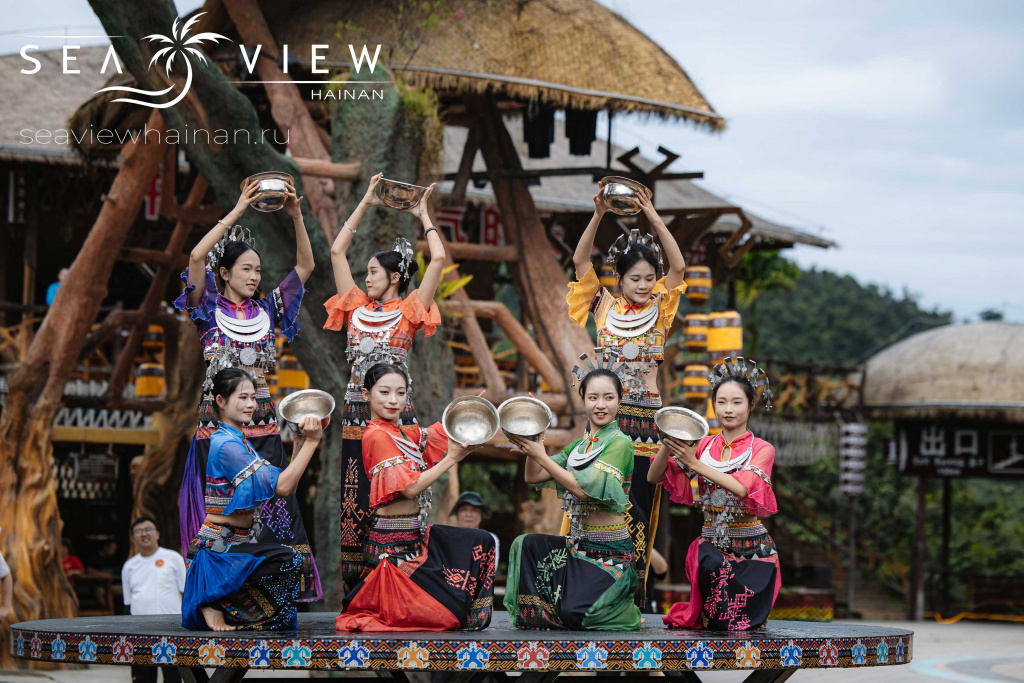
Active Recreation: For Those Who Love Adrenaline
For those who have grown tired of educational excursions (or simply love to stay in motion), the park has prepared a huge number of activities. Their selection is constantly expanding and changing, so each time you can discover something new!
Where else can you race ATVs through true off-road terrain, and then practice on a special track? Here you'll find go-karting, an exhilarating zip line, and a variety of slides to suit every taste.
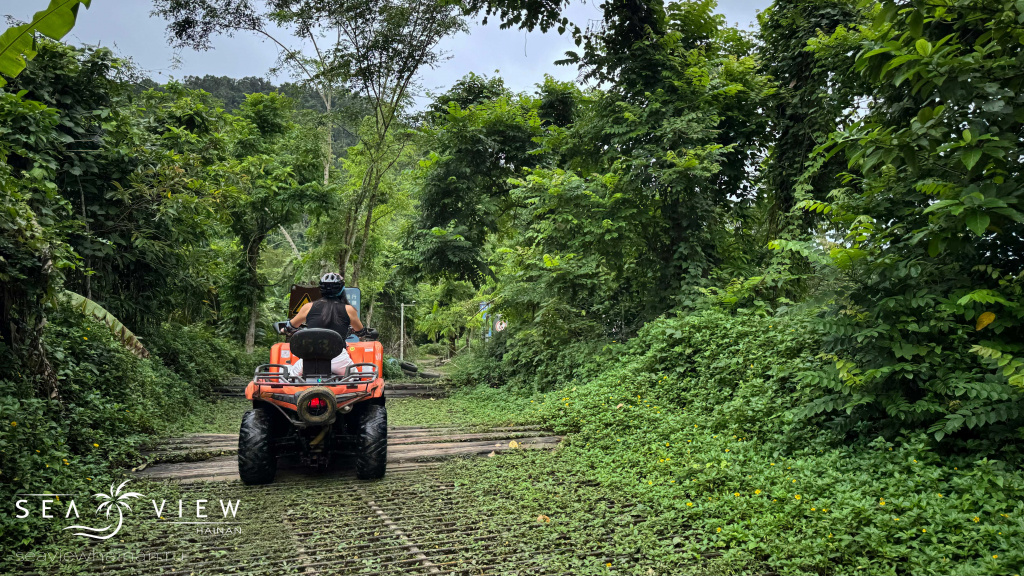
Bicycle Over the Abyss: A Unique Hainan Attraction
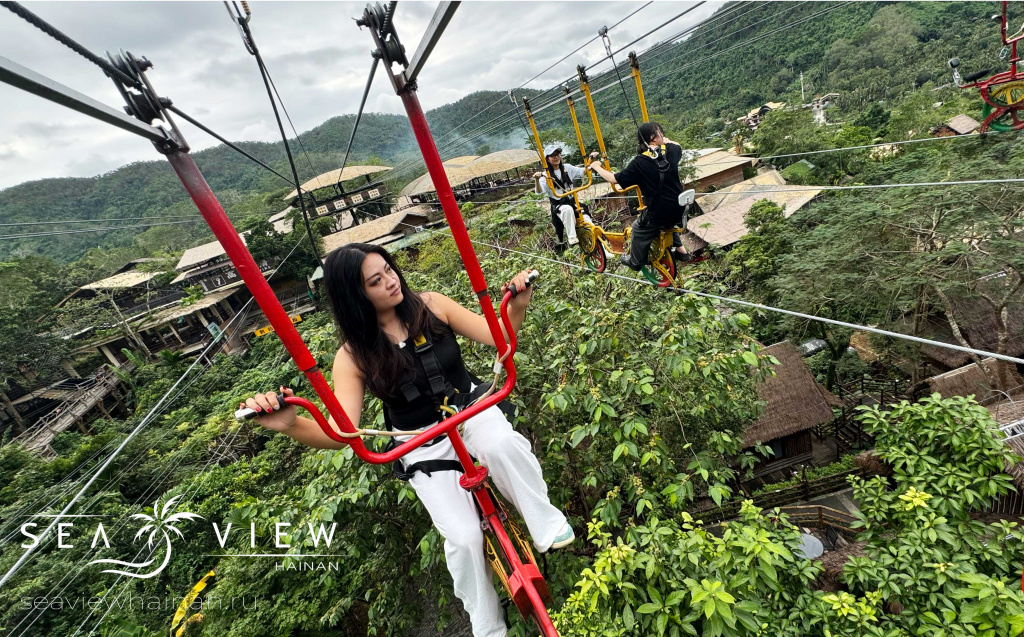
Special attention deserves the park's unique attraction—a tightrope bicycle ride! This is Hainan's first high-altitude cycling zone, located at the upper station of the cable car rapid descent.
A steel cable stretching over one hundred meters in length is laid directly above the Ganshiling canyon and consists of five lines. Imagine cycling at a height of several dozen meters amidst the valleys of the tropical rainforest, with mist swirling around you and the legendary boat-shaped houses gliding by far below... This is a complete immersion in the mysterious atmosphere of the Li and Miao villages, combined with the thrilling sensation of "floating" in a sea of clouds. Unforgettable!
Crossbow: The Weapon of Ancient Hunters
Want to feel like a skilled marksman? Test your archery skills with a crossbow! A bow is a weapon for shooting, but the crossbow is a keeper of ancient secrets. Thousands of years ago, the Li people already had a tradition of hunting with crossbows. It shoots silently, offers high accuracy, and could be made by hand from readily available materials for hunting and fishing. It's no wonder that nearly every Li tribesman owned their own crossbow! Today, the bow and crossbow have become part of traditional sporting competitions and are extremely popular among visitors.
This activity is located in the starting area of the rainbow slide. After putting on protective arm guards and ensuring all safety measures are in place, you will be able to experience the incomparable joy of a precise shot under the guidance of an experienced instructor. Who knows—perhaps the spirit of an ancient hunter will awaken within you!
Recharge Before Your Adventures!
Don't forget to fuel up properly before your adventures! The park offers a huge selection of places to do so—from cozy cafes to authentic eateries.
We, for example, stopped for lunch at a wonderful cafe where we were served a tray filled with local Hainanese dishes. And do you know what was especially striking? The food is laid out on fresh palm leaves! Not only is it beautiful, but it also adds wonderful aroma—the leaves impart a light tropical essence to the dishes. You certainly won't leave hungry: the tray is brimming with a variety of treats. Everything is delicious, hearty, and colorful—a true feast for both the eyes and the stomach!
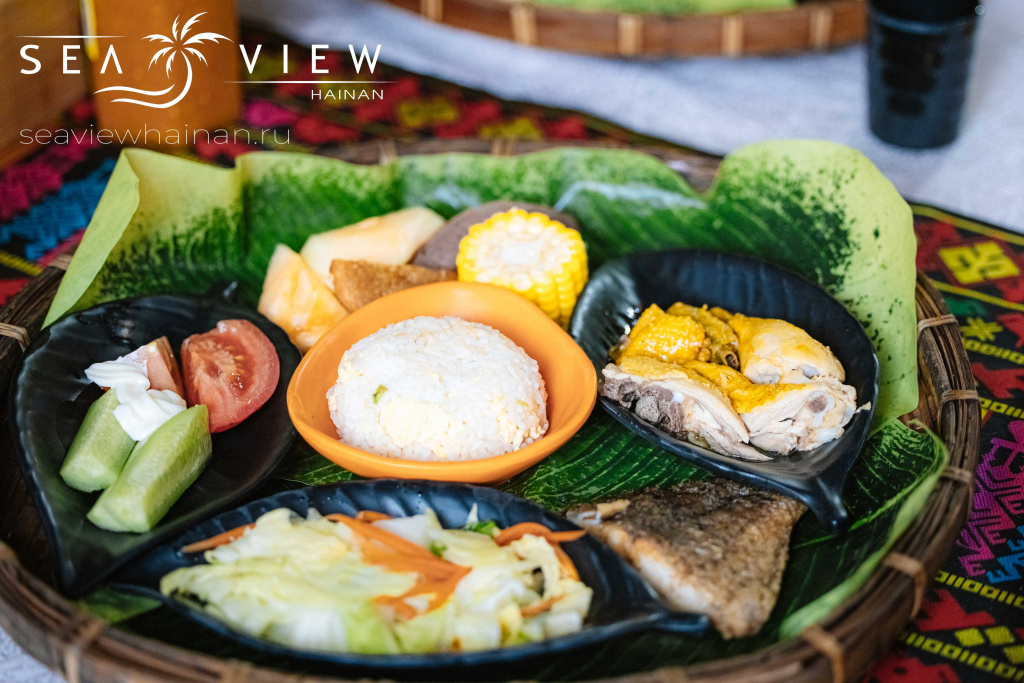
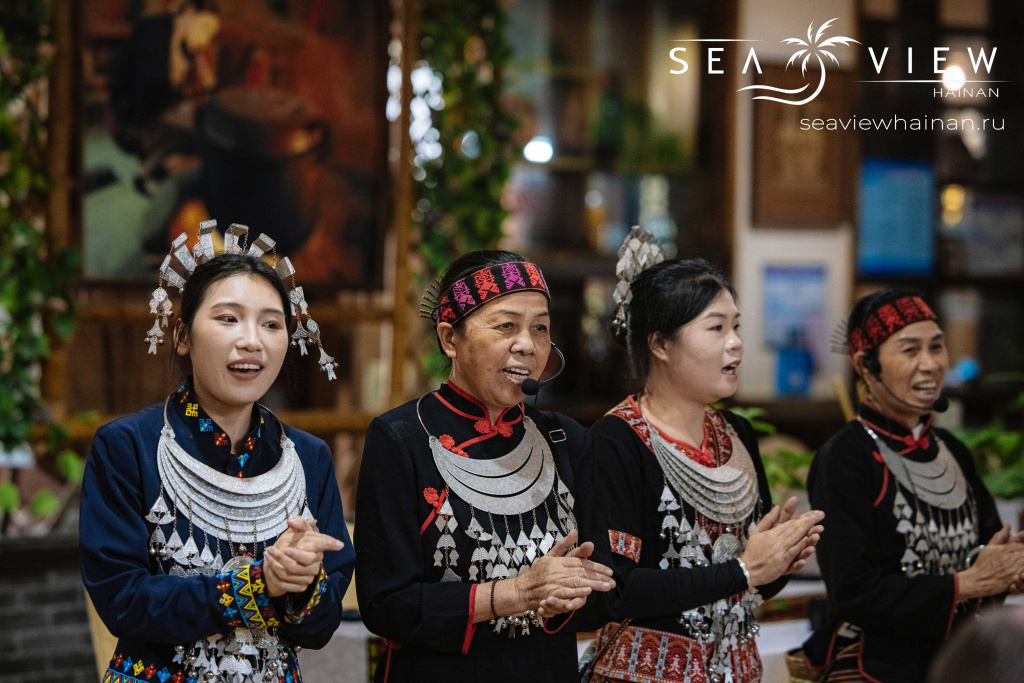
And that's not all. During lunch, we were fortunate to witness a performance of local folklore. Right in the middle of the meal, folk songs began to fill the air—it felt as though we had been invited to visit a friendly local family.
Evening Magic: The Bonfire Show
But the real magic begins with the arrival of dusk. The grand bonfire show is something worth staying in the park until evening for!
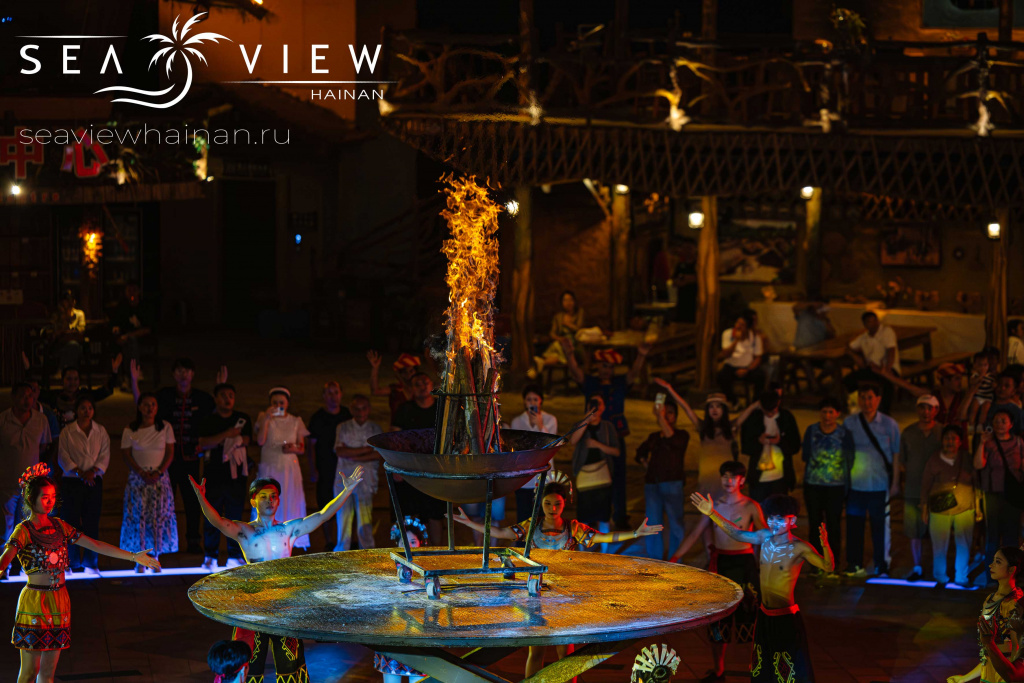
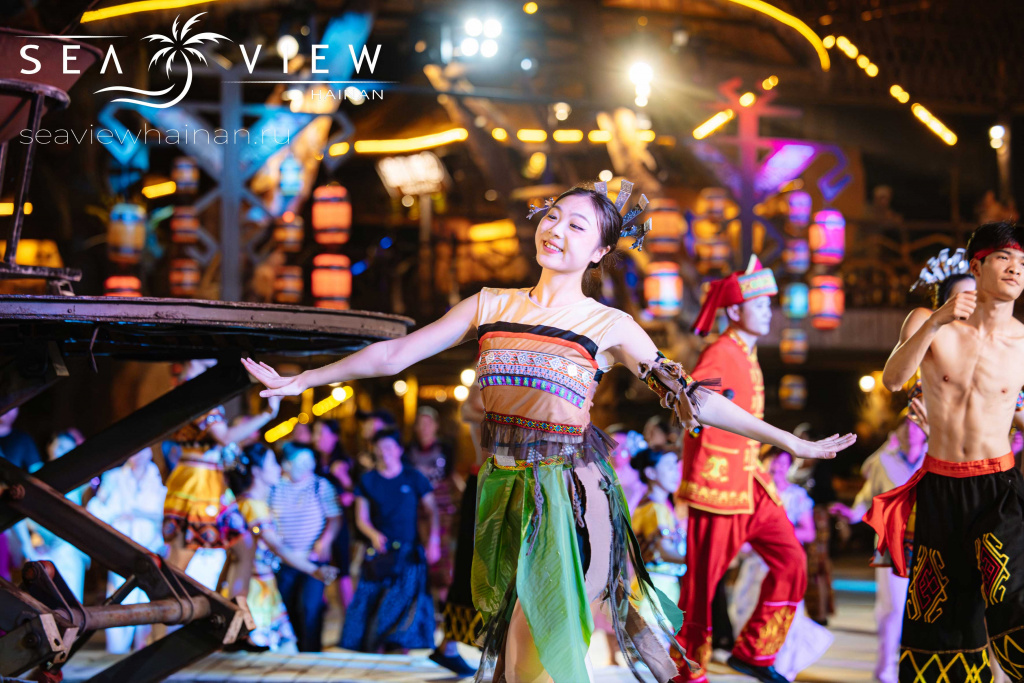
Imagine: an elder solemnly lights the sacred fire using an ancient ritual—and you become part of this ceremony. Immediately after the ritual, all the guests join in a huge circle dance around the bonfire, moving to the rhythm of lively folk songs! Don't worry if you don't know the steps—the local people will be happy to teach you the traditional dances of the Li and Miao.
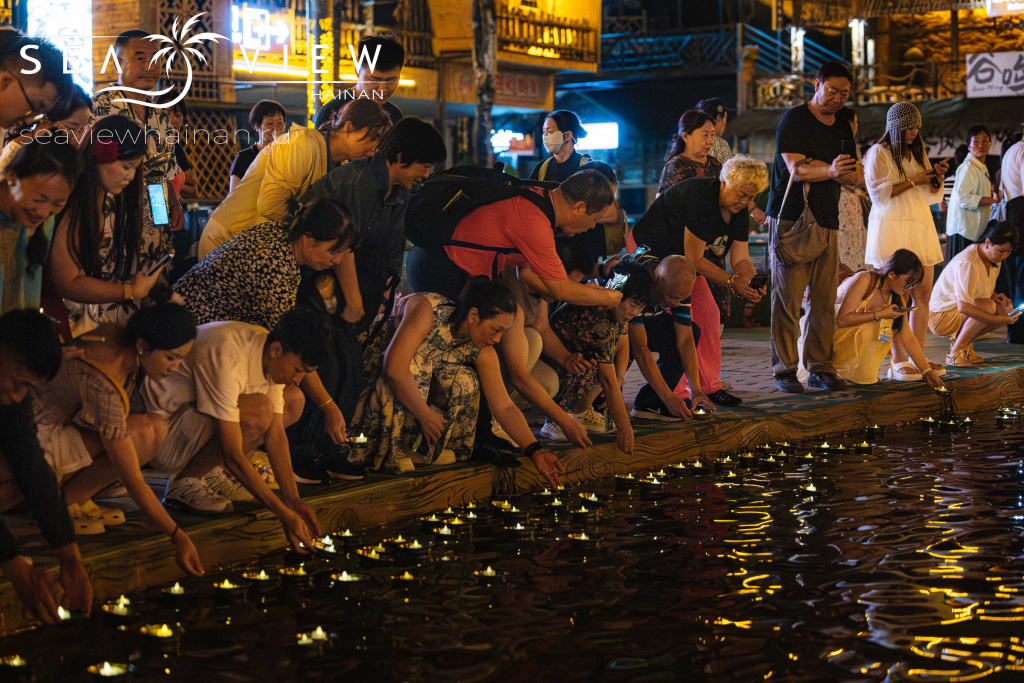
And to conclude, the most touching moment awaits you. You will make your deepest wish and release a glowing lantern onto the surface of Wishing Lake. Watching as hundreds of lights slowly drift away into the darkness, reflected in the water... It is not just beautiful—it is truly magical.
And so our day in Binlanggu flew by—from morning until evening we explored traditions, tried unusual dishes, marveled at the craftsmanship of artisans, and danced by the bonfire. And you know what's the most amazing part? We never got bored for a single moment! Here, every corner breathes history, and every person you meet is ready to share a piece of their soul.
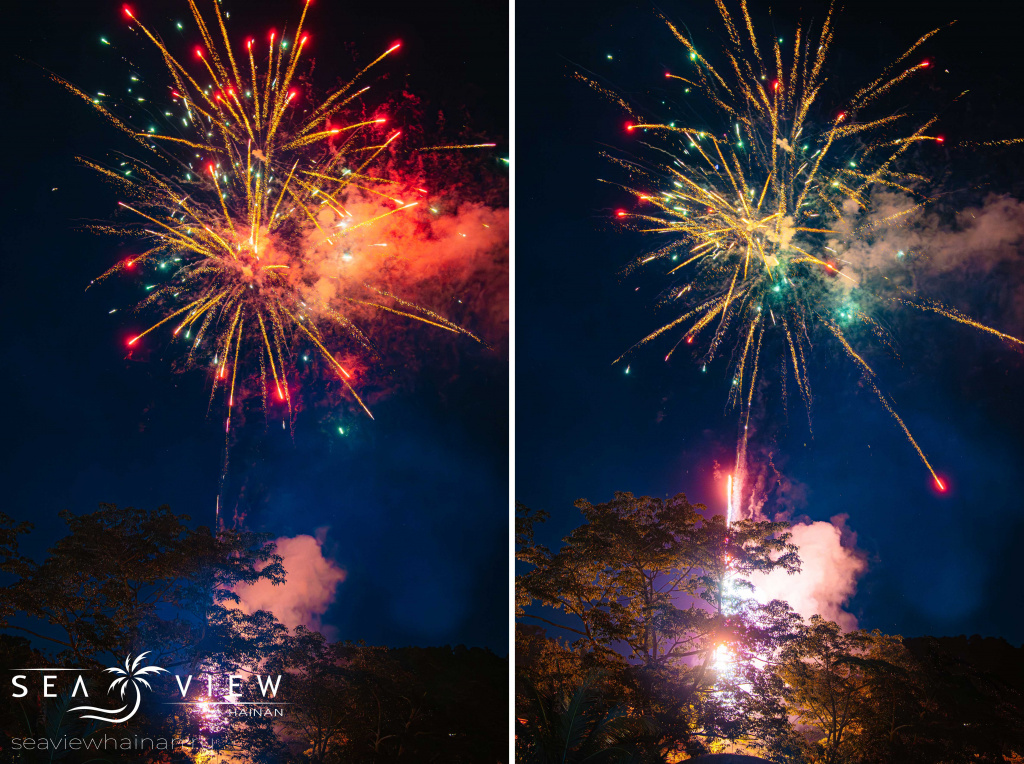
We hope our little journey has inspired you as well.
Now you know that you can experience the authentic culture of the Li and Miao peoples not in a museum behind glass, but here—alive, real, resounding with music and dance. Come to Binlanggu and create your own memories.
We promise: this is a day you will never forget!
__________________
If you enjoyed our article, please share it with your loved ones and leave us a comment below!
0 Comments